Grape vine training shapes the future productivity of your vineyard. The training method you choose affects grape quality, yield potential, and operational efficiency. Different systems suit different grape varieties, climates, and production goals. Understanding grape vine training options helps vineyard owners make strategic infrastructure decisions. This comprehensive comparison examines the most effective training methods used by professional viticulturists worldwide. From traditional Guyot to high-production Cordon systems, each approach offers distinct advantages for specific vineyard conditions.
Tips
Grape vine training methods: a complete comparison guide for vineyard owners
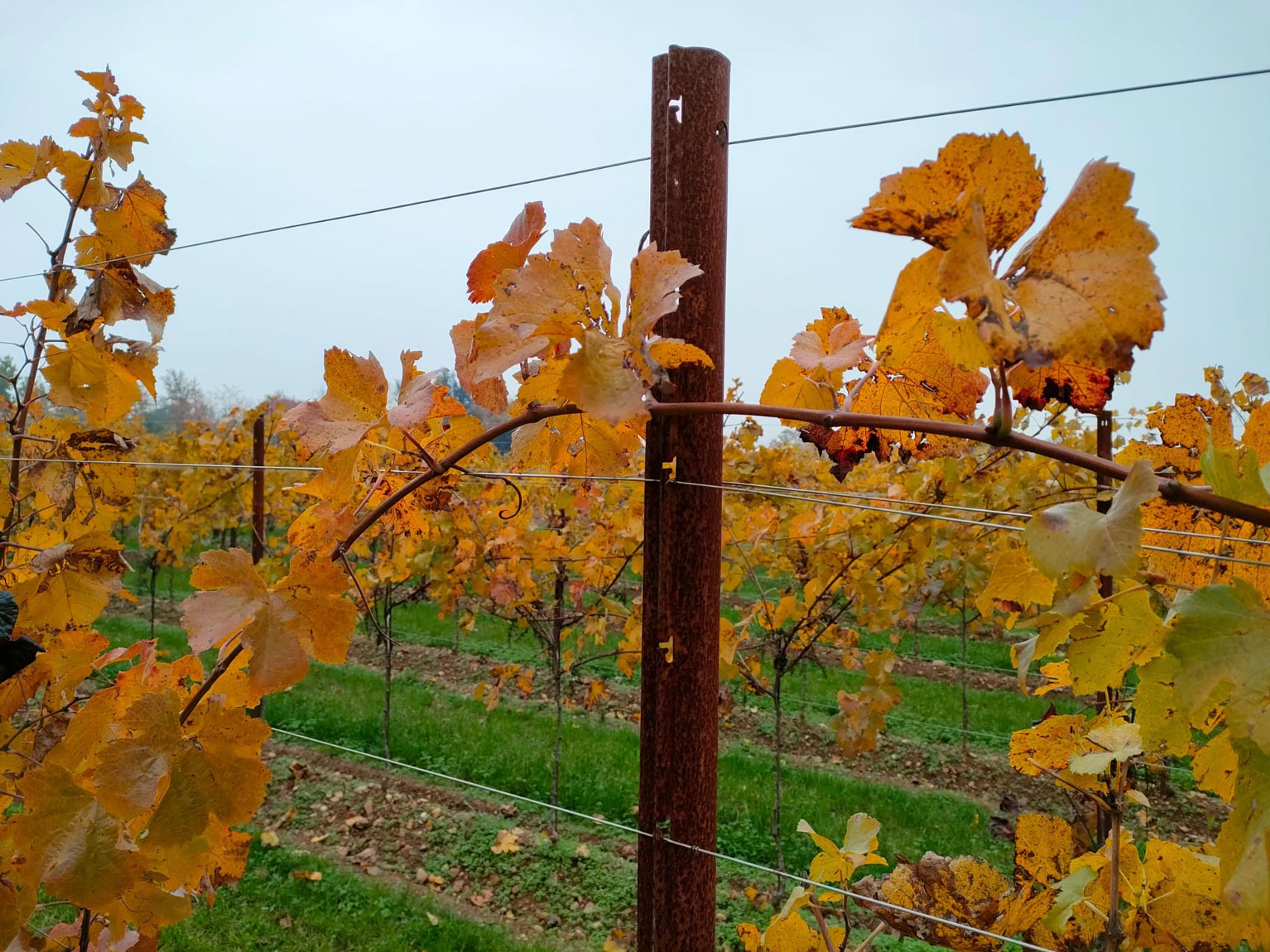
Understanding grape vine training: core principles and benefits
Grape vine training establishes the permanent structure of the vine. It determines how fruiting wood develops and positions within the trellis system. Proper training maximizes sun exposure on leaves and fruit zones. It also improves air circulation to reduce disease pressure.
The goals of grape vine training include controlling vine vigor and balancing vegetative growth with fruit production. Well-trained vines simplify pruning operations and reduce labor costs. They also facilitate mechanical harvesting where applicable.
Training decisions must align with your chosen trellis infrastructure. Post height, wire positioning, and spacing all interact with training methods. Investing in quality vineyard posts from the start ensures your training system performs optimally for decades.
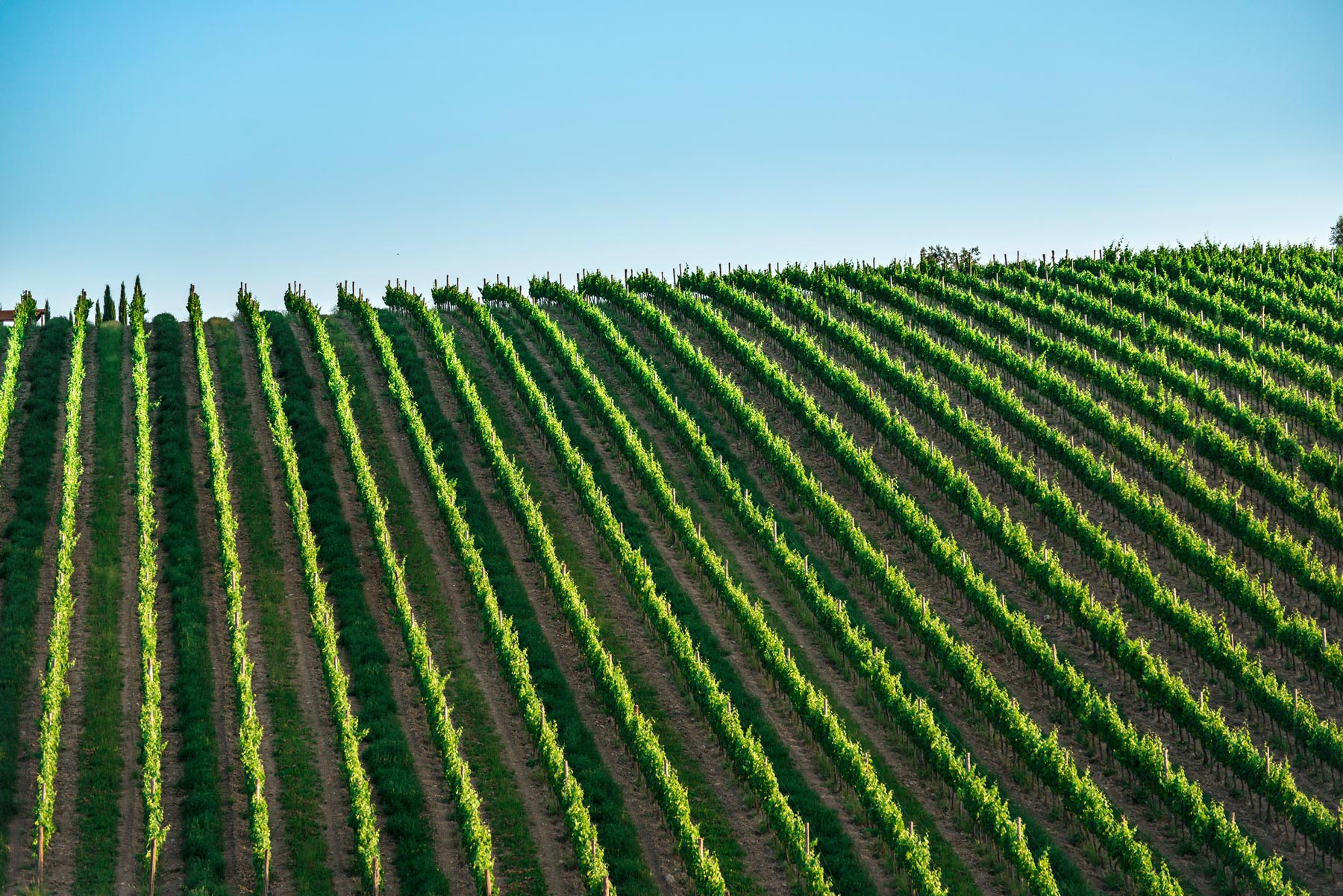
Instructions for training a young grape vine
Training begins immediately after planting. Young vines require guidance to develop proper structure. The first two years establish the foundation for long-term productivity.
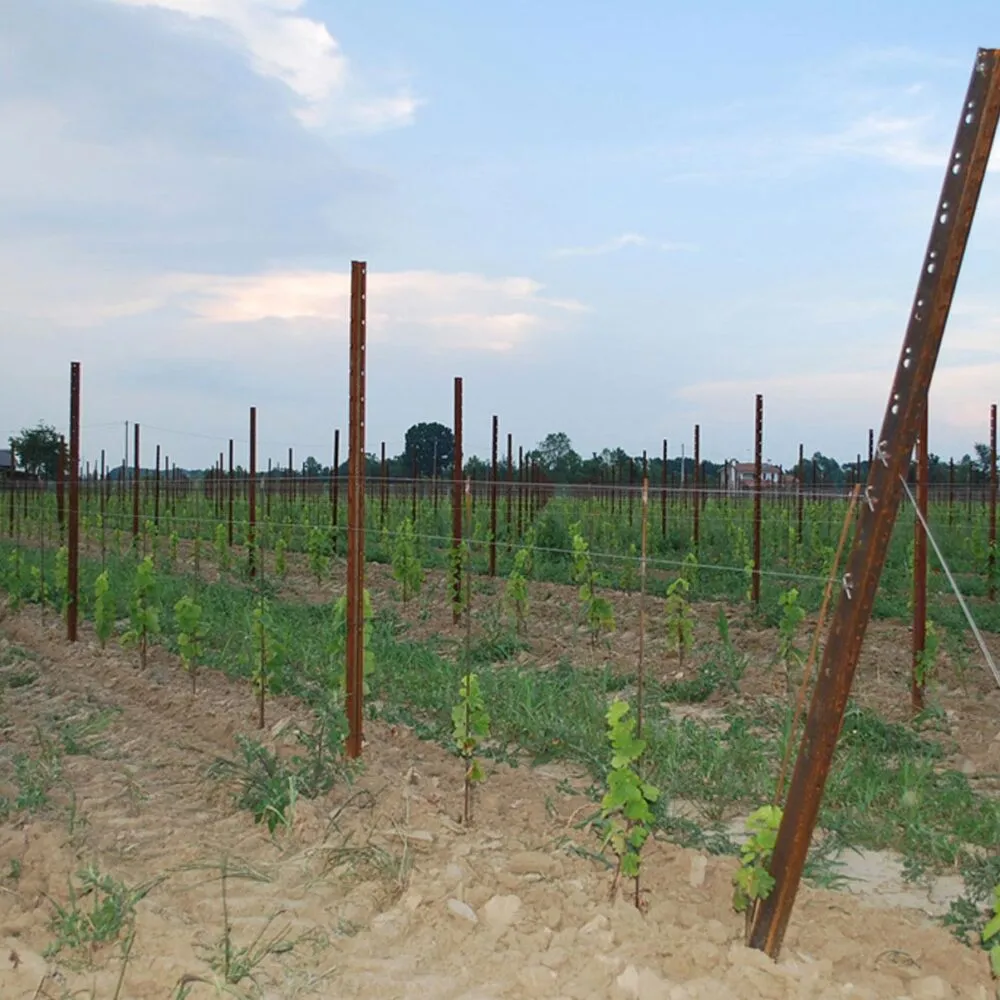
During year one, focus on developing a strong root system and single vertical trunk. Allow only one vigorous shoot to grow upward. Remove all other shoots to concentrate vine energy. Tie the selected shoot to a training stake for support.
In year two, continue trunk development until it reaches the first wire height. For Guyot systems, this means approximately 1.0 to 1.2 meters above ground. For high cordon systems, extend the trunk to 1.5 to 1.8 meters. Maintain a straight trunk by regular tying to stakes.
Year three introduces the fruiting structure. In cane-pruned systems like Guyot, select and position fruiting canes along the wire. In spur-pruned systems, establish permanent cordons extending horizontally from the trunk. This is when grape vine training truly shapes productive capacity.
Quality vineyard stakes support young vines during this critical establishment phase. Sika offers stakes in 7mm and 8mm diameters specifically designed for vine training support.
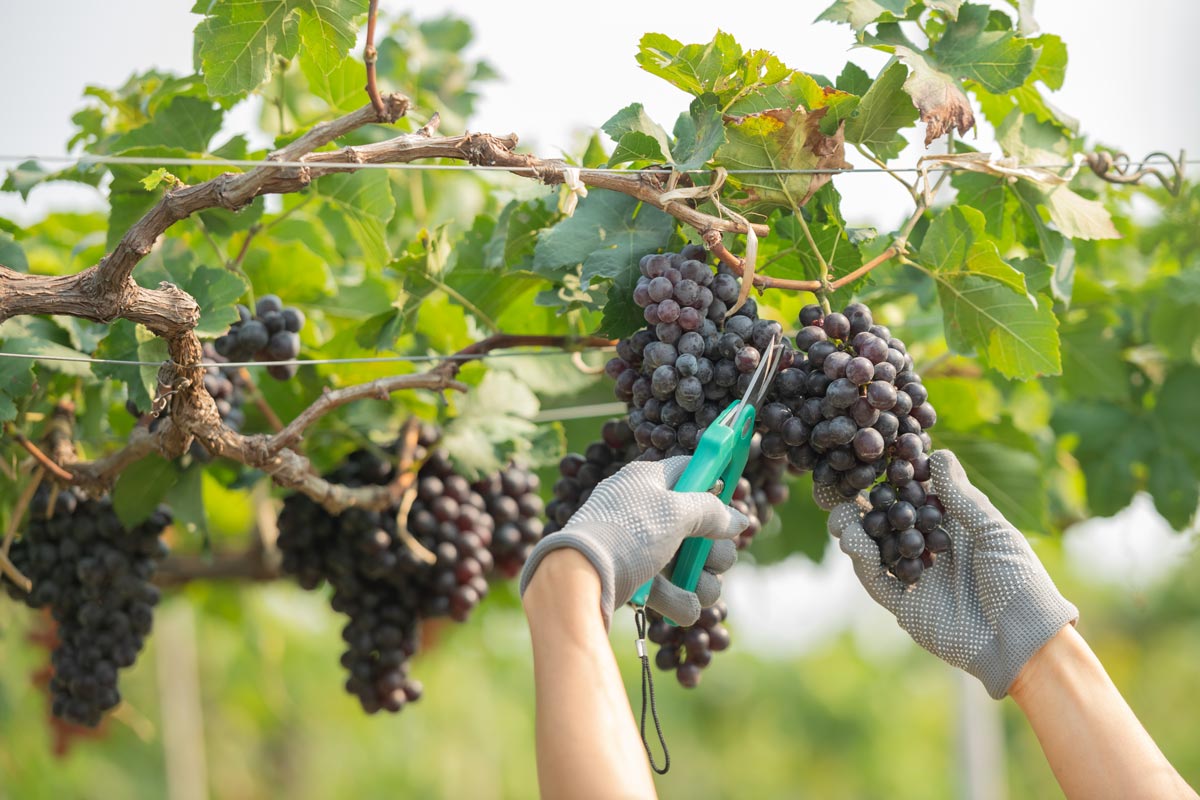
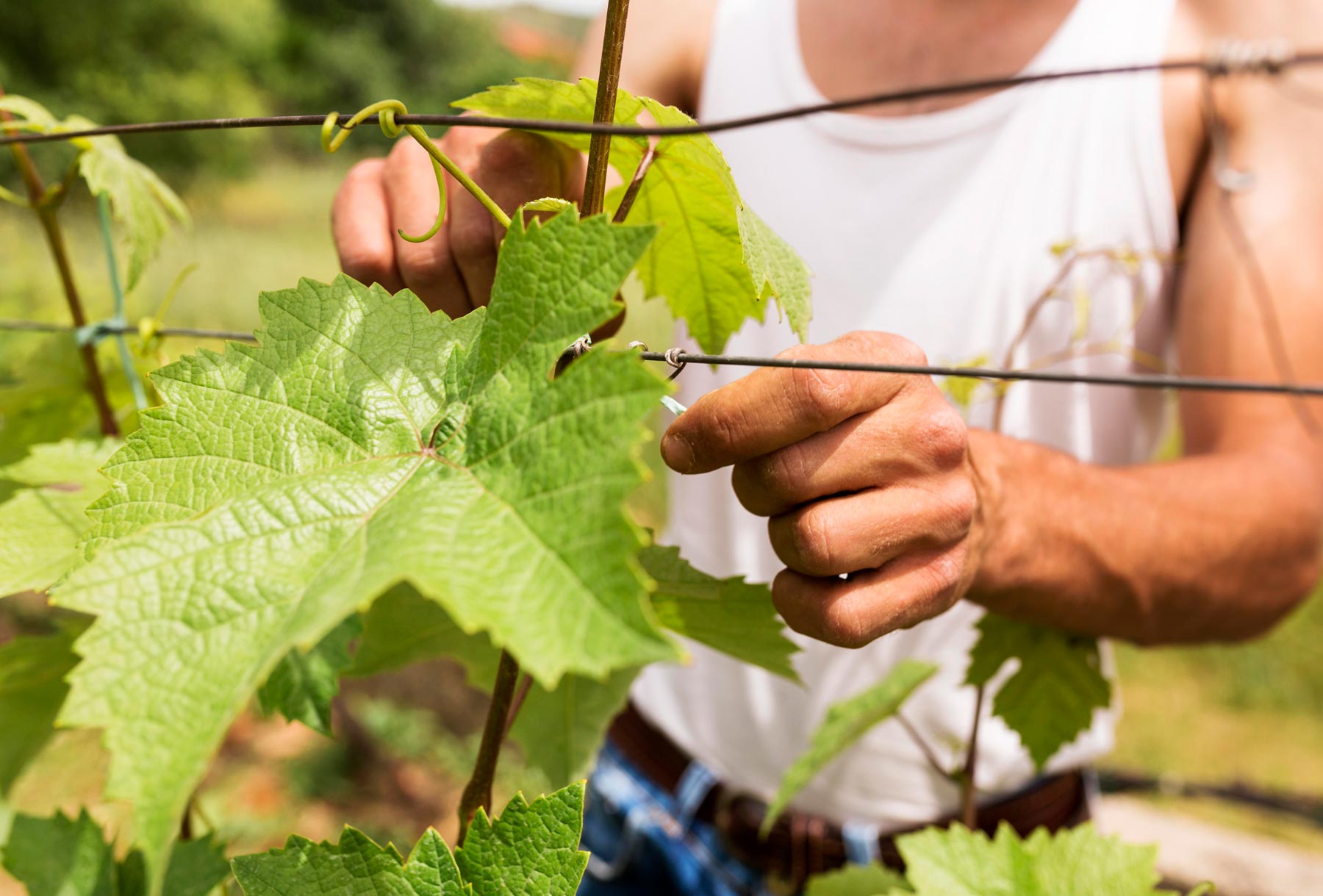
Step-by-Step guide to training grape vines on a wire trellis
Training grape vines on a wire trellis requires systematic execution. Follow these steps for professional results.
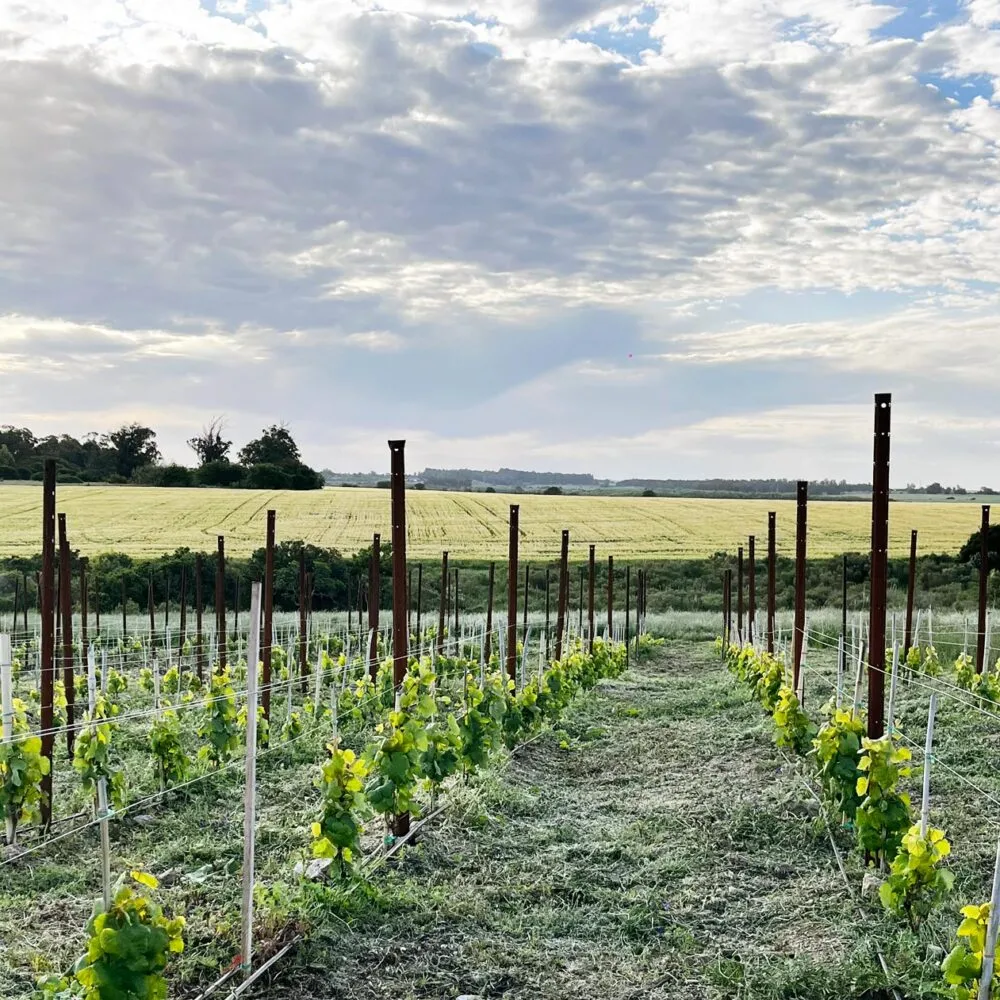
Step 1: Install your trellis infrastructure. Position end posts and line posts at proper intervals. For most systems, space line posts every 5 meters. Install galvanized or corten steel posts measuring 2.0 to 2.5 meters above ground.
Step 2: String trellis wires at correct heights. For Guyot training, position the first wire at 1.0 to 1.2 meters. Add catch wires at 40-centimeter intervals above. For Sylvoz systems, place the main cordon wire at 1.5 to 2.0 meters with support wires below.
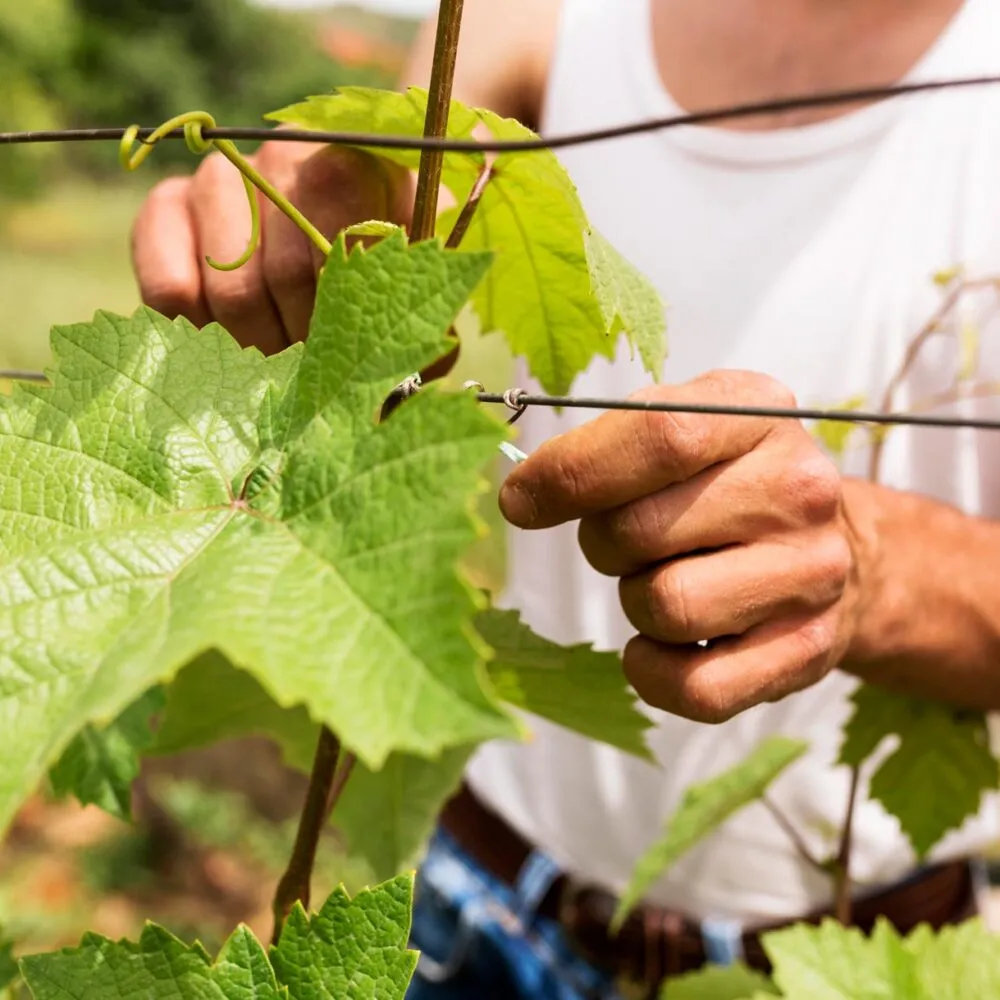
Step 3: Train the trunk vertically. Guide the main shoot upward using vineyard stakes. Tie loosely to allow stem expansion. Remove competing shoots throughout the growing season.
Step 4: Establish the head or cordon. Once the trunk reaches wire height, make training decisions based on your chosen system. For Guyot, develop a head with renewal spurs. For Cordon training, bend the trunk horizontally along the wire.
Step 5: Position fruiting wood annually. In cane-pruned systems, select and tie new fruiting canes each winter. In spur-pruned systems, maintain short spurs along permanent cordons.
Step 6: Manage shoot growth during the season. Position vertical shoots between catch wires. Remove excess growth to maintain canopy balance. This ongoing grape vine training ensures consistent fruit quality.
Comparing popular grape vine training systems
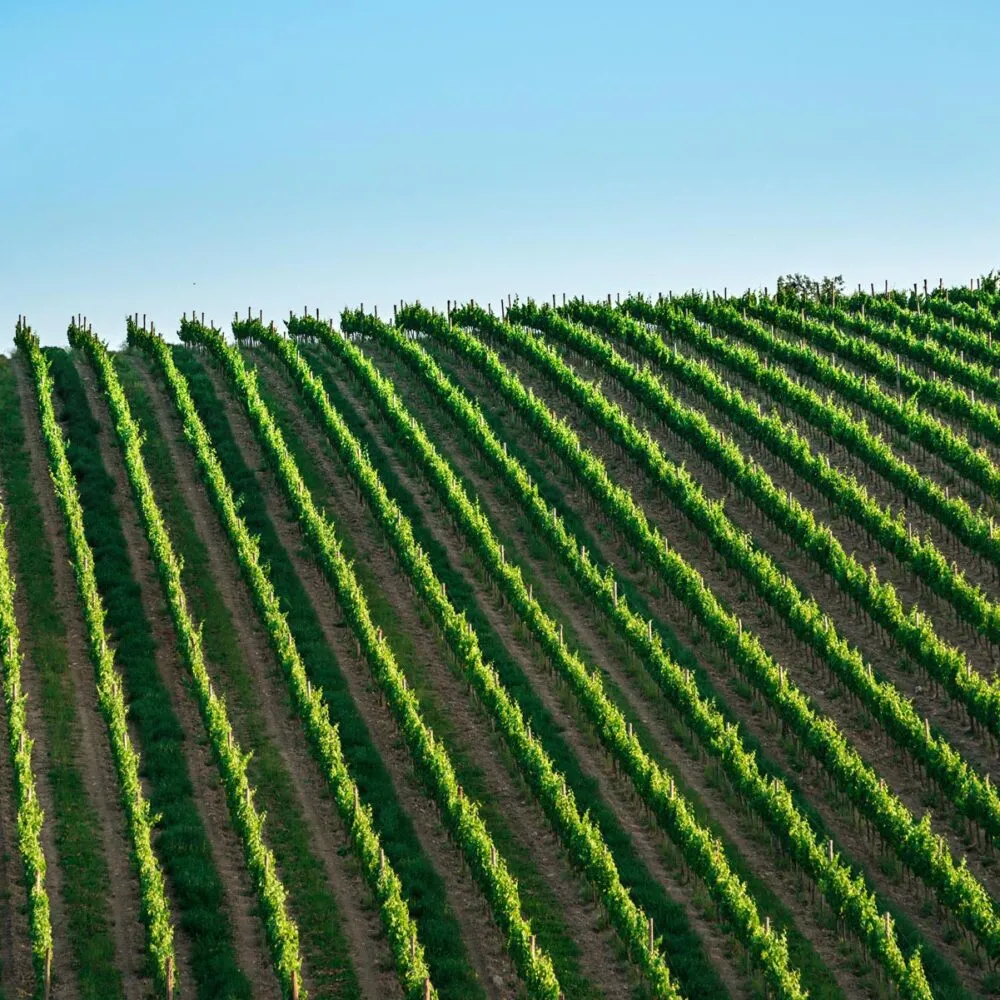
Vineyard owners must evaluate multiple training systems before committing to infrastructure investment. Each method presents specific advantages and requirements:
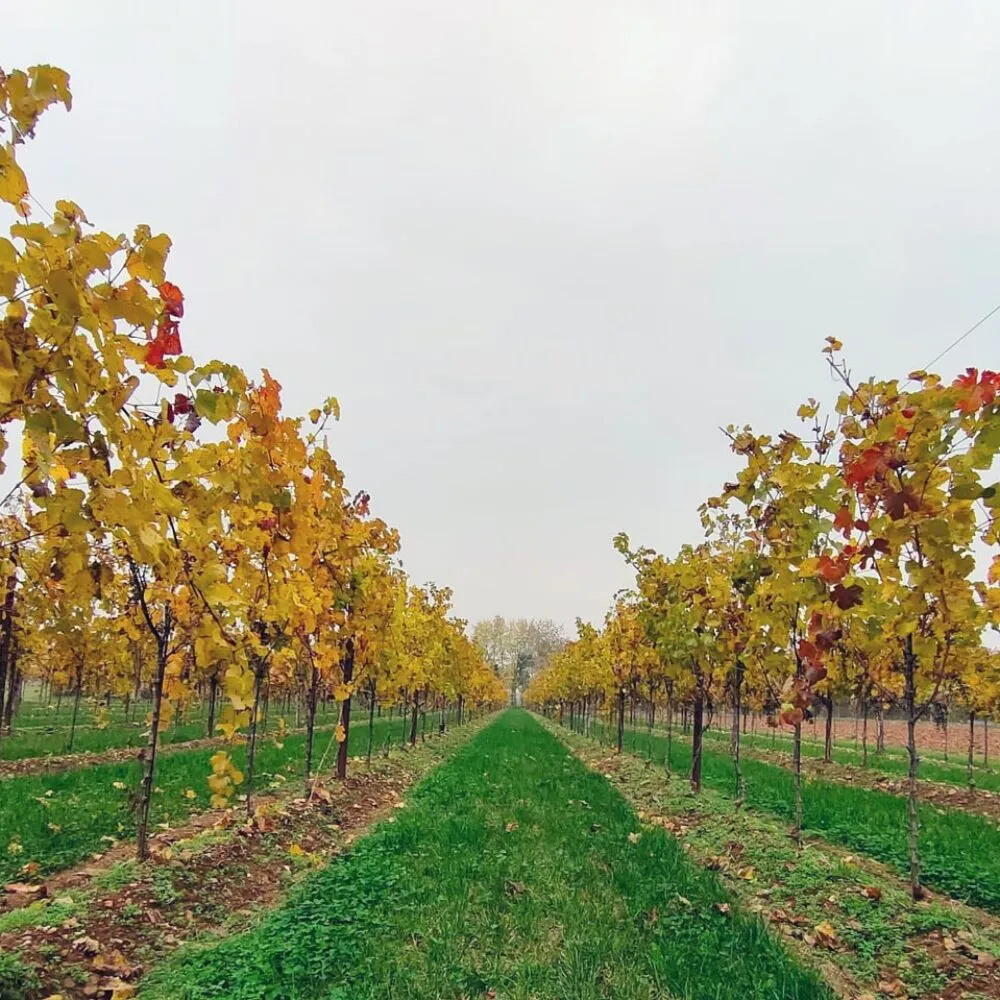
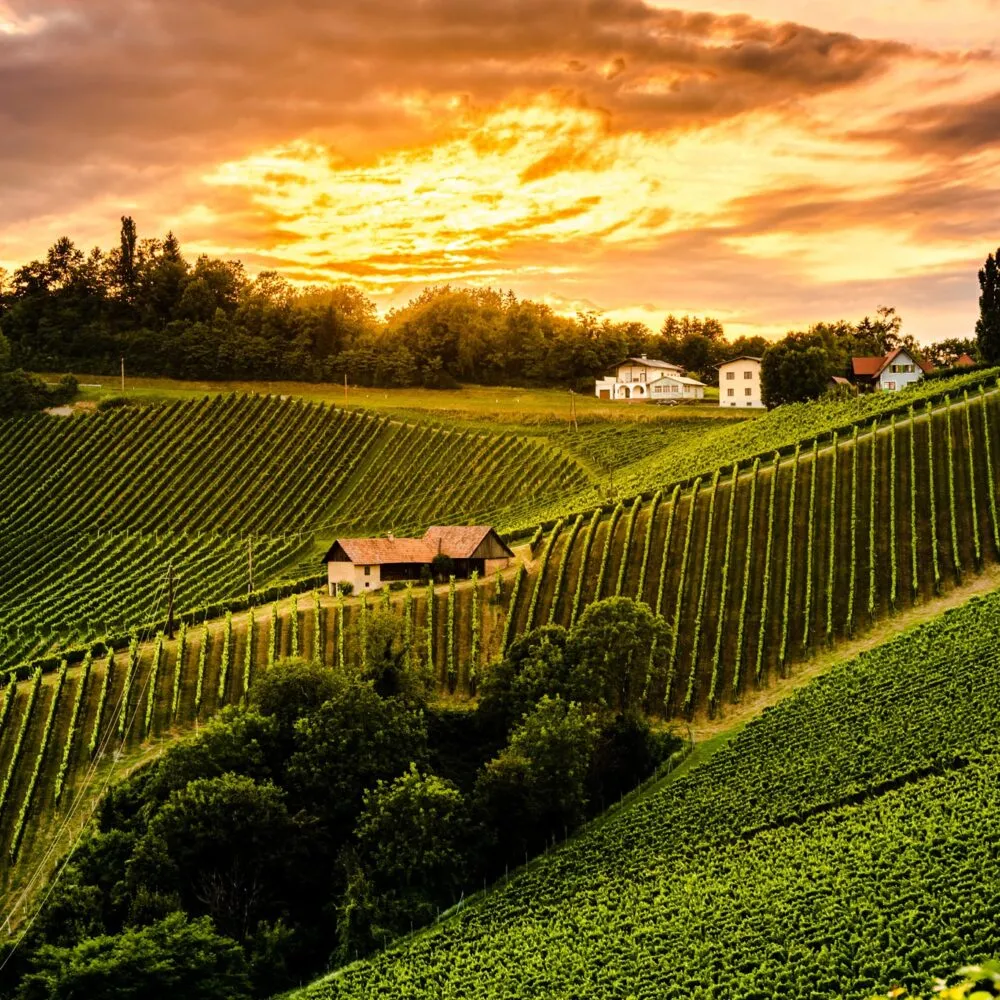
- Guyot training: The most popular cane-pruned system in quality wine production. Uses one or two fruiting canes renewed annually from a short trunk. Ideal for low to moderate vigor varieties on hillside terrains. Requires posts of 2.0 to 2.3 meters with 3 to 4 wire levels. Adopted by over 35% of Italian winegrowers
- Cordon training (spur-pruned): Establishes permanent horizontal arms with short fruiting spurs. Reduces annual labor through simplified pruning. Facilitates mechanical operations. Suits vigorous varieties and fertile soils. Available in low, mid-wire, and high configurations
- Sylvoz system: Features a high horizontal cordon with arched fruiting canes pointing downward. Excellent for vigorous vines on cool, fertile soils. Requires taller posts of 2.0 to 2.5 meters supporting 5 to 6 wires. Combines high yields with quality fruit production
- Casarsa system: Derived from Sylvoz with a high trunk of 1.5 to 1.8 meters. Short fruiting canes arch downward naturally. Designed specifically for mechanized pruning and harvesting. Works well in medium-fertility soils with row spacing of 6 to 8 meters
- Geneva Double Curtain (GDC): Divides the canopy horizontally into two parallel curtains. Maximizes production on high-vigor sites. Requires specialized cross-arm trellis construction. Best suited for large-scale commercial operations prioritizing yield.
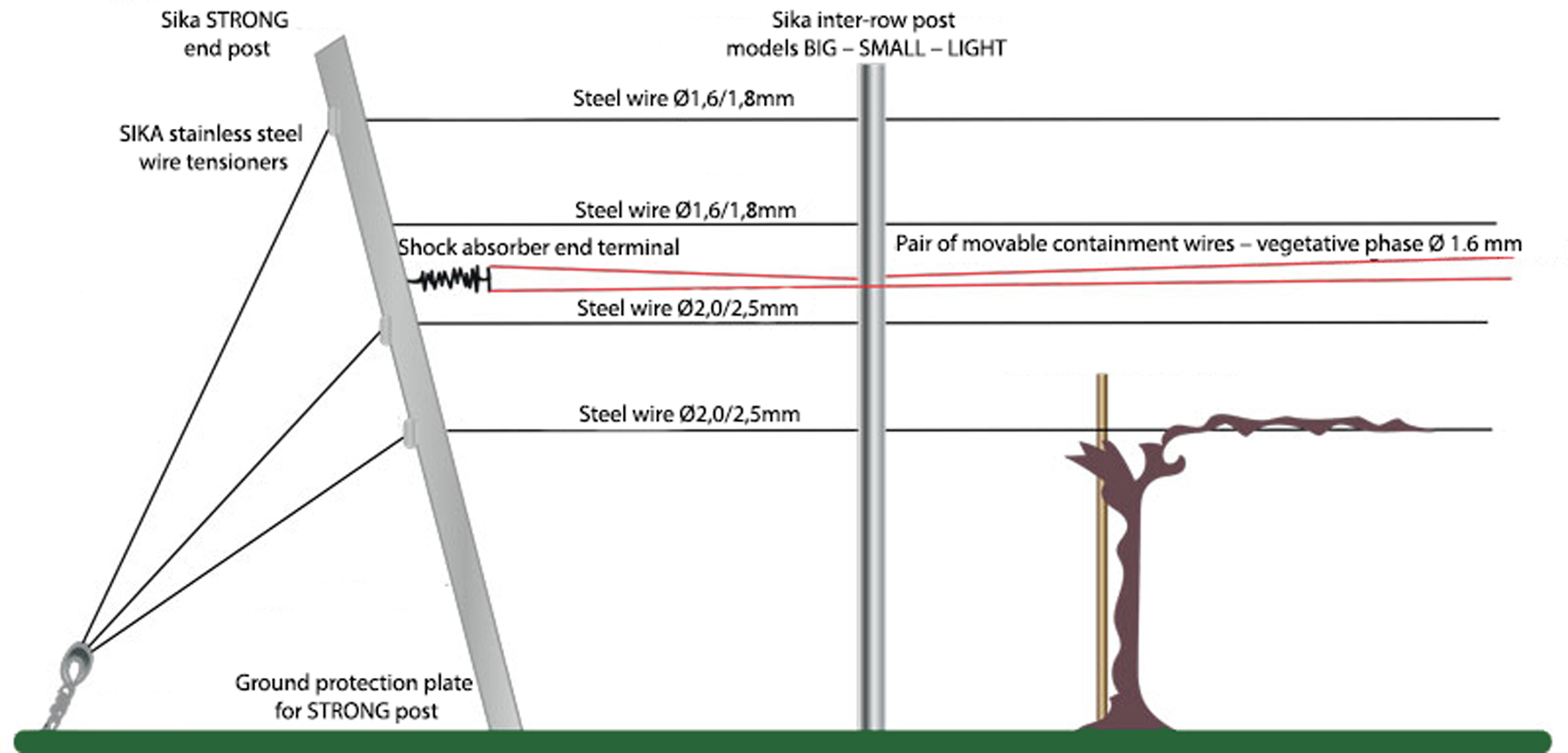
Selecting quality infrastructure for your grape vine training system
Successful grape vine training depends on reliable trellis infrastructure. Quality components ensure your training system performs as designed throughout the vineyard’s productive life.
Sika vineyard posts: engineered for every training method
Sika manufactures vineyard posts specifically engineered for professional training systems. Over 23 years of specialized experience inform every product design. Galvanized steel posts offer superior corrosion resistance through hot-dip galvanization. Corten steel posts provide exceptional durability with natural aesthetic appeal.
Post dimensions match every training system requirement. The “Big” model at 65x45mm suits heavy-duty Sylvoz and GDC installations. The “Medium” model at 51x41mm works perfectly for standard Guyot and Cordon systems. The “Small” model at 51x33mm serves lighter training applications.
Innovative combined punching systems accommodate multiple wire heights for any grape vine training method. Section openings ensure proper ventilation at soil level. Steel thickness of 1.8 to 2.0mm provides decades of mechanical strength.
Worldwide delivery and turnkey vineyard solutions
Sika ships over 400,000 posts annually to more than 40 countries. ISO 9001, 14001, and 45001 certifications guarantee consistent quality. Complete turnkey solutions include line posts, end posts, wire tensioners, training stakes, and all essential accessories.
Contact Sika’s technical team for personalized recommendations matched to your grape vine training objectives and vineyard conditions.

The best posts for your vineyard


Need a quote?
Request our updated catalog
Fill out the form to receive the catalog and get a free, no-obligation quote within 24 hours.