


Trellis anchors transfer the accumulated tension of every wire from the end post into the surrounding soil. In a mature commercial row that load commonly reaches 400 to 1,500 kg, depending on wire count and gauge. Without an anchor sized for it, end posts lean inward and wire height drops within a few seasons.
Which trellis anchor for which soil
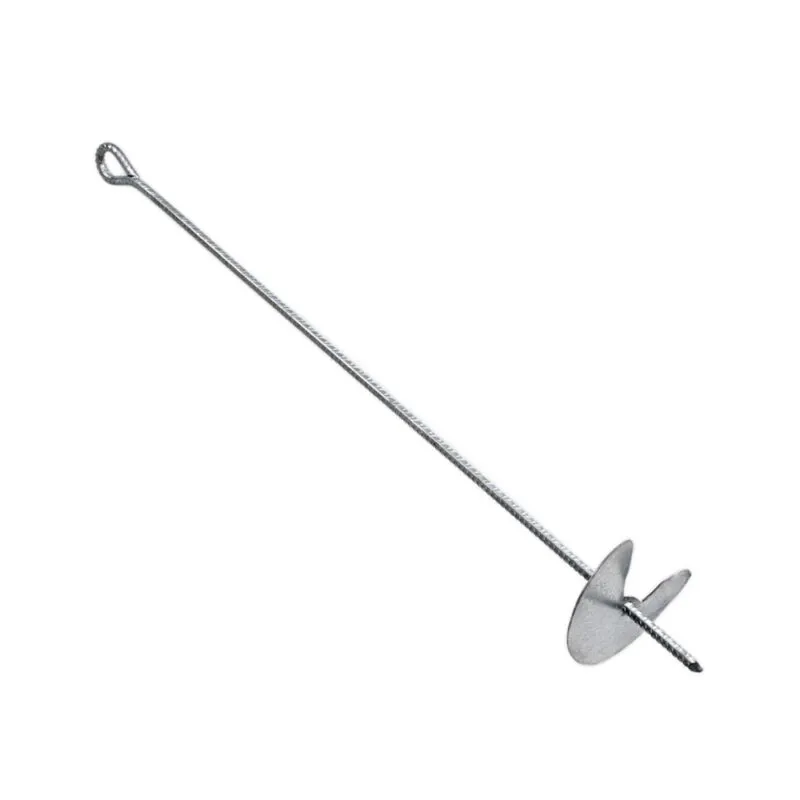
Helical ground anchors screw into the ground like a corkscrew, disturbing almost no soil. The practical choice on flat terrain and when retrofitting an established vineyard, where excavation would damage existing roots. Performs well in firm soils, poorly where large stones can deflect the blade.
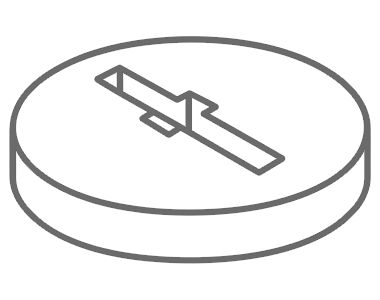
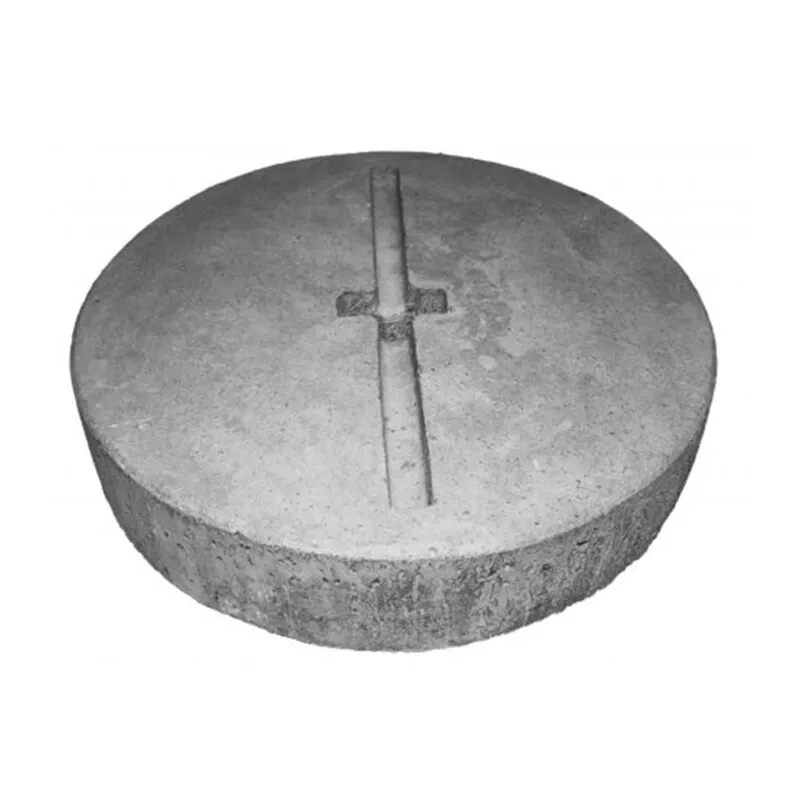
Concrete base anchors combine a concrete block with a galvanised steel rod. Holding power comes from the mass plus the friction of the soil above it. Slower to install, but the safer option on long rows and heavy canopies where peak loads are highest.
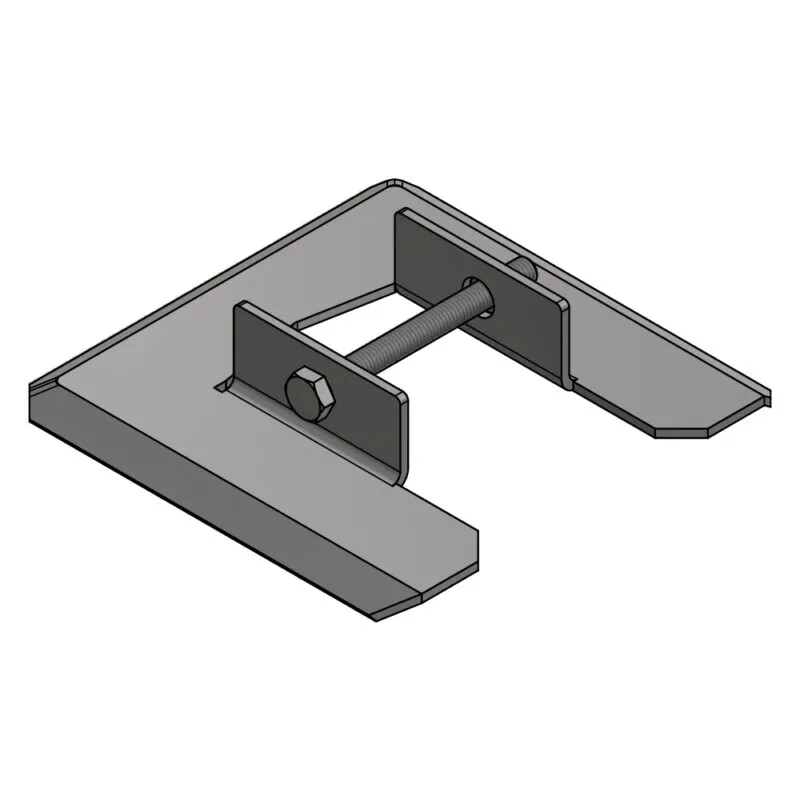
Anchor plates, 150 x 150 x 3 mm, spread the load across a wider surface. Used in soft or sandy ground to stop the post from sinking, they can rescue an installation where the soil alone does not hold.
Sizing the anchor
Three variables change the calculation: soil type, since sandy ground offers markedly less holding capacity than clay; seasonal moisture, because saturated soil temporarily loses shear strength; and frost heave, which lifts anchors vertically in cold climates and loosens the connection with each cycle.
Design for the worst case the site will see, not the average. For the full method, including burial depths by soil type, see how to anchor grape trellis posts.
Matching anchors to end posts
An anchor is only as good as the post it restrains. Sika end posts are available in Mini Strong 56 x 46 mm and Strong 68 x 56 mm sections, both designed to take the anchor connection at the top of the post.
All anchors are galvanised, manufactured in Italy with steel certified to EU 10204 3.1. They integrate with the full range of vineyard supplies.


