Read also

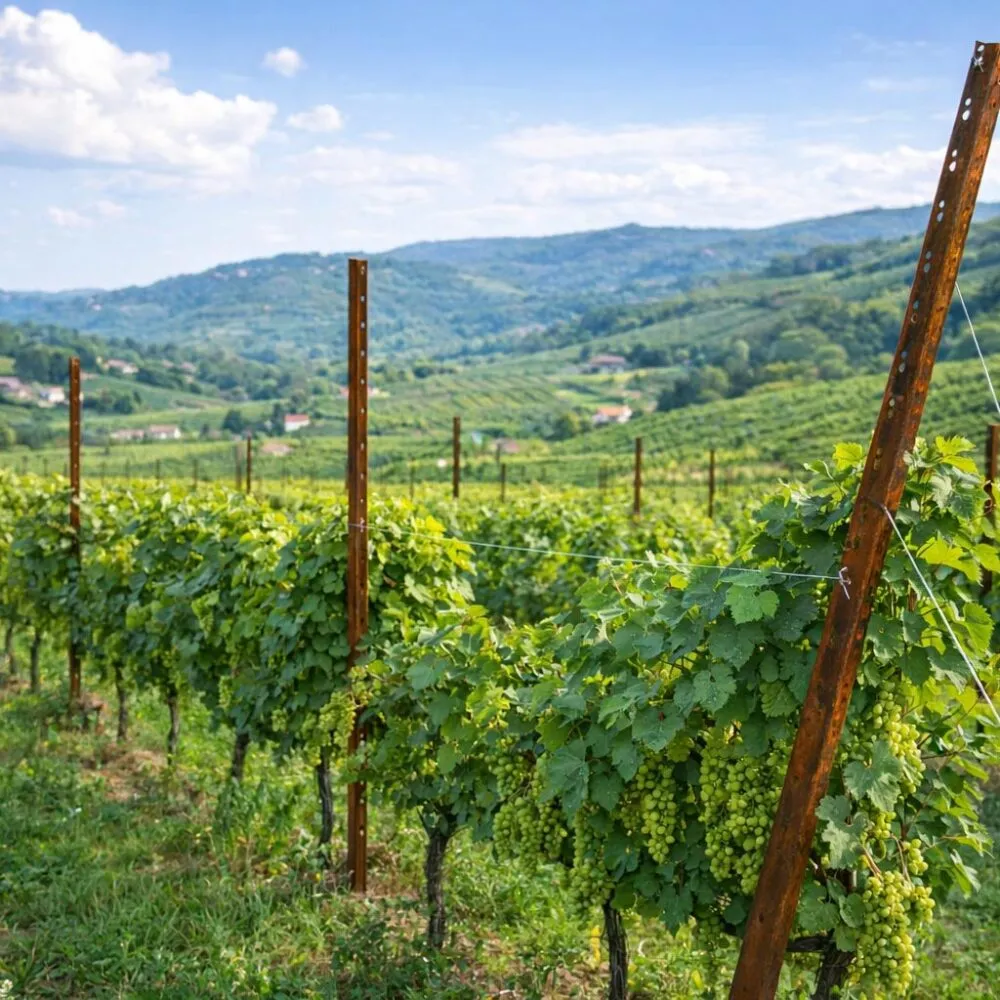

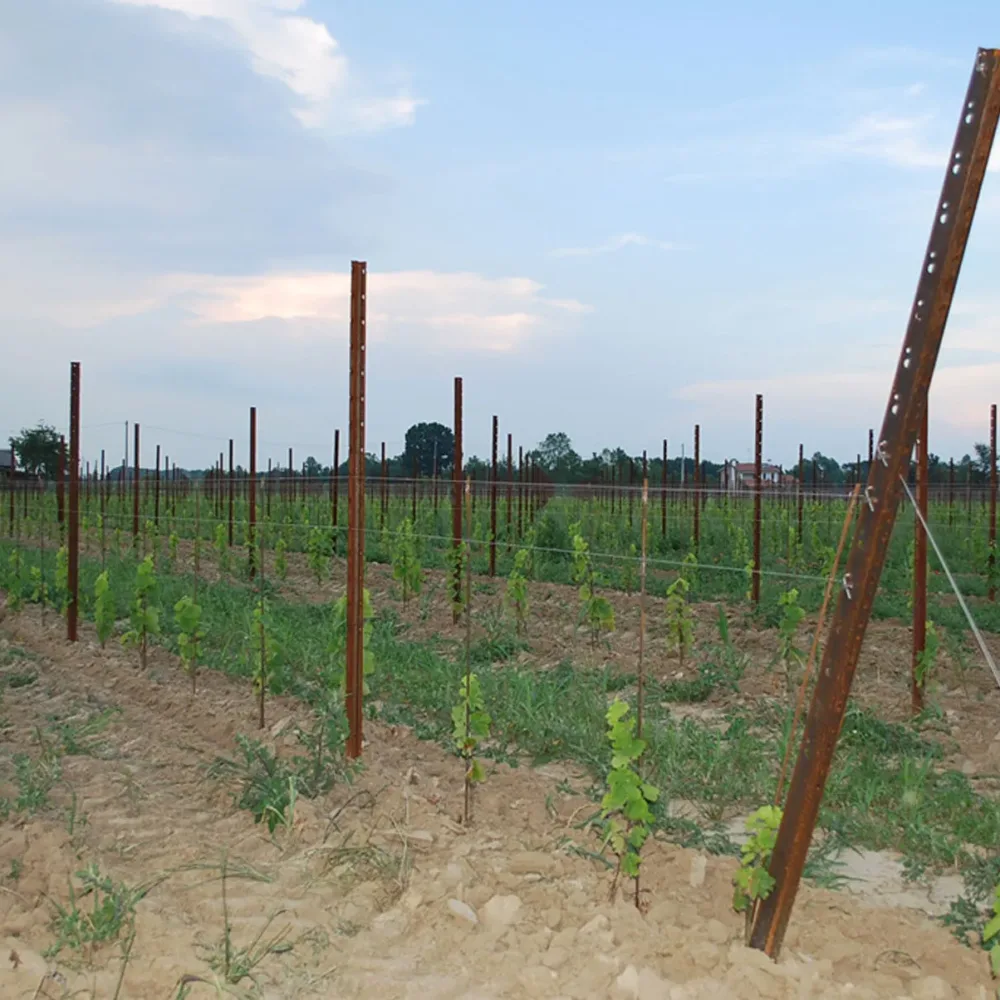
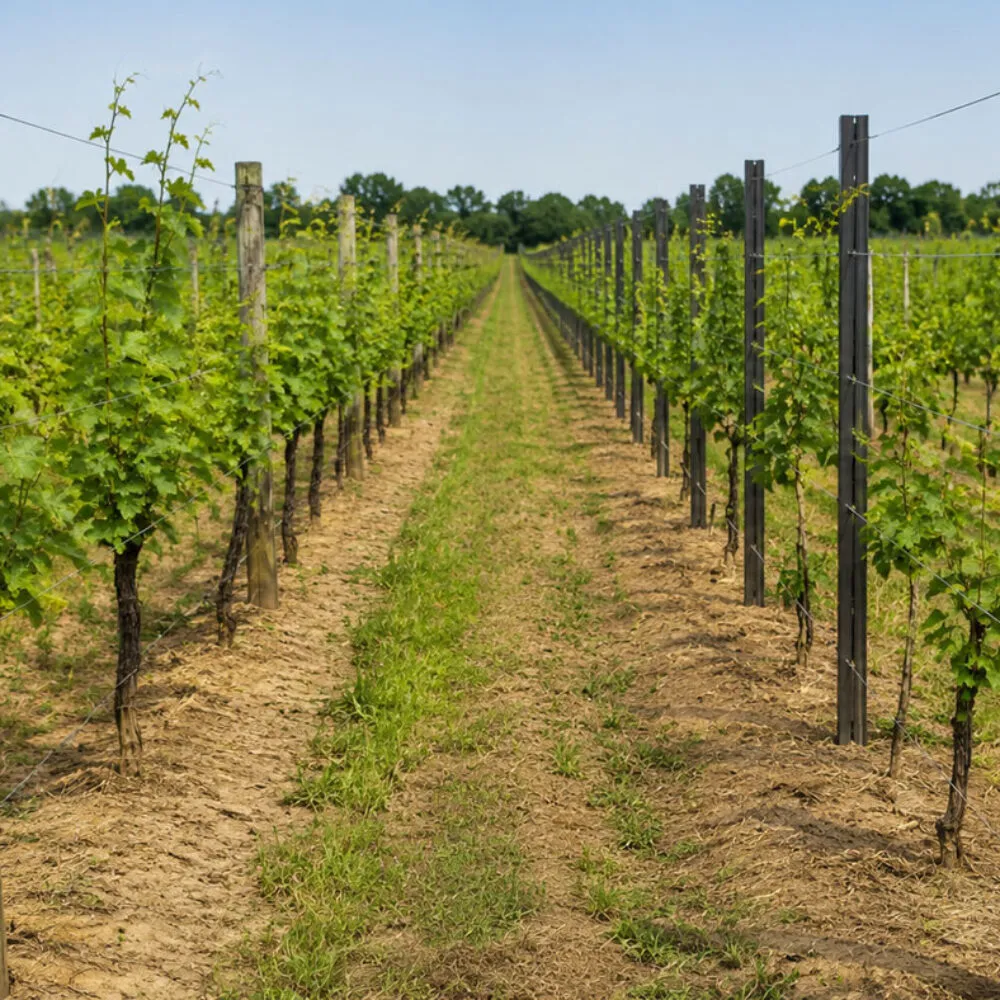
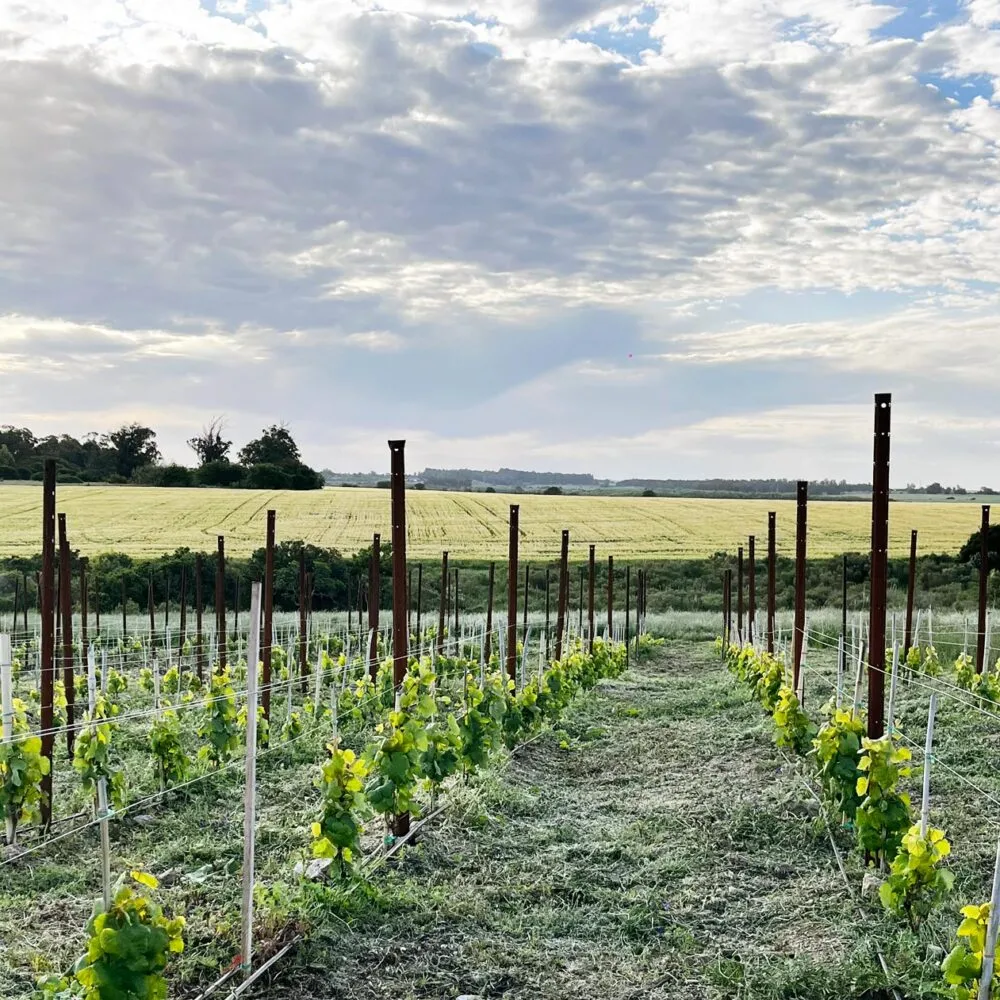


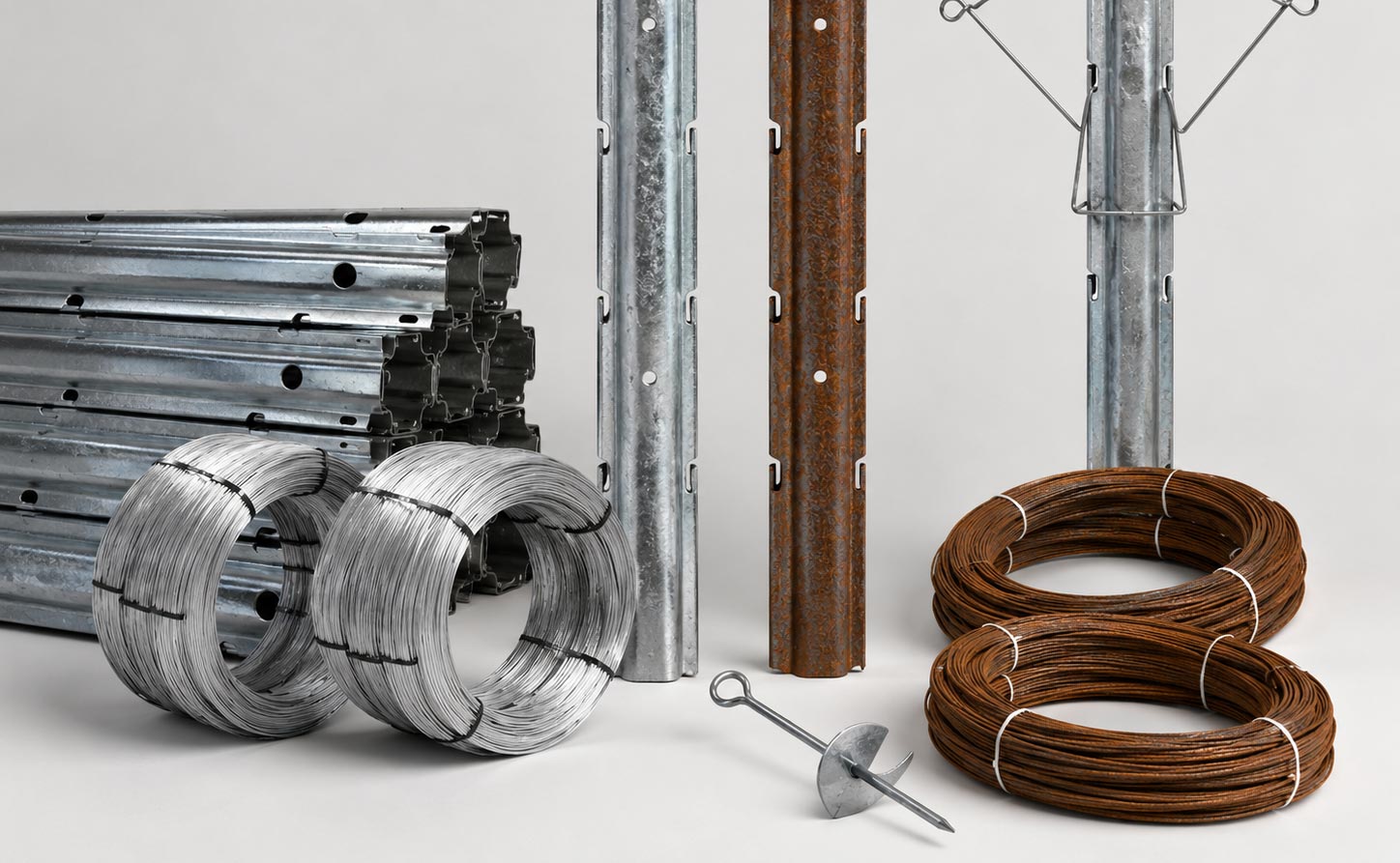
Anchoring transfers the accumulated tension of every trellis wire from the end post into the surrounding soil. In a mature commercial row that load commonly reaches 400 to 1,500 kg, depending on wire count and gauge. Without an anchor sized for it, end posts lean inward, wire height drops and canopy management degrades within a few seasons.
This guide covers the forces involved, the four anchoring methods used in commercial viticulture, installation depths by soil type, and how to match post specifications to the system you are building.
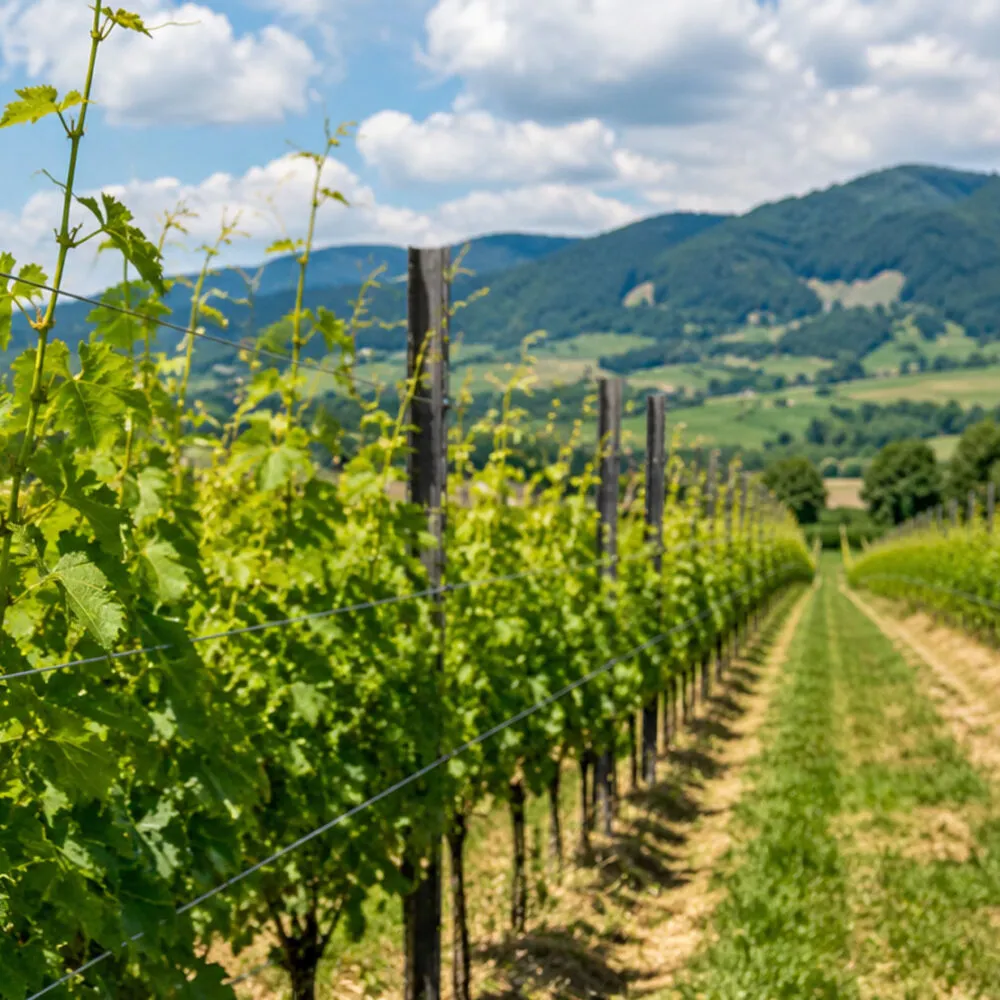
A single high-tensile wire is normally tensioned between 100 and 250 kg. Multiply that by the four to six wires of a vertical shoot positioning system and the terminal post is resisting several hundred kilograms continuously — not as a peak load, but every hour of every day for the life of the vineyard.
The direction matters as much as the magnitude. Line posts resist lateral loads: wind, canopy weight, the occasional machine impact. End posts resist longitudinal tension pulling straight down the row. These are different problems, and they need different solutions.
Three variables change the calculation:
Design for the worst case the site will see, not the average.

Four methods dominate commercial installations. None is universally better; the choice follows soil and access.
A steel plate is buried at an angle opposing the direction of wire tension, then connected to the top of the end post by rod or cable. Holding power comes from the volume of soil above the plate. Reliable across most soil types, and the most common solution in European vineyards.
A helical blade is screwed into the ground like a corkscrew. Installation disturbs almost no soil, which makes this the practical choice when retrofitting an established vineyard where excavation would damage root systems. Performs well in firm soils, poorly where large stones are present.
A buried horizontal post or concrete block, connected to the end post by cable. Resistance comes from the mass itself plus the friction of the soil above it. Labour-intensive to install, but effective for heavy-duty applications and long rows.
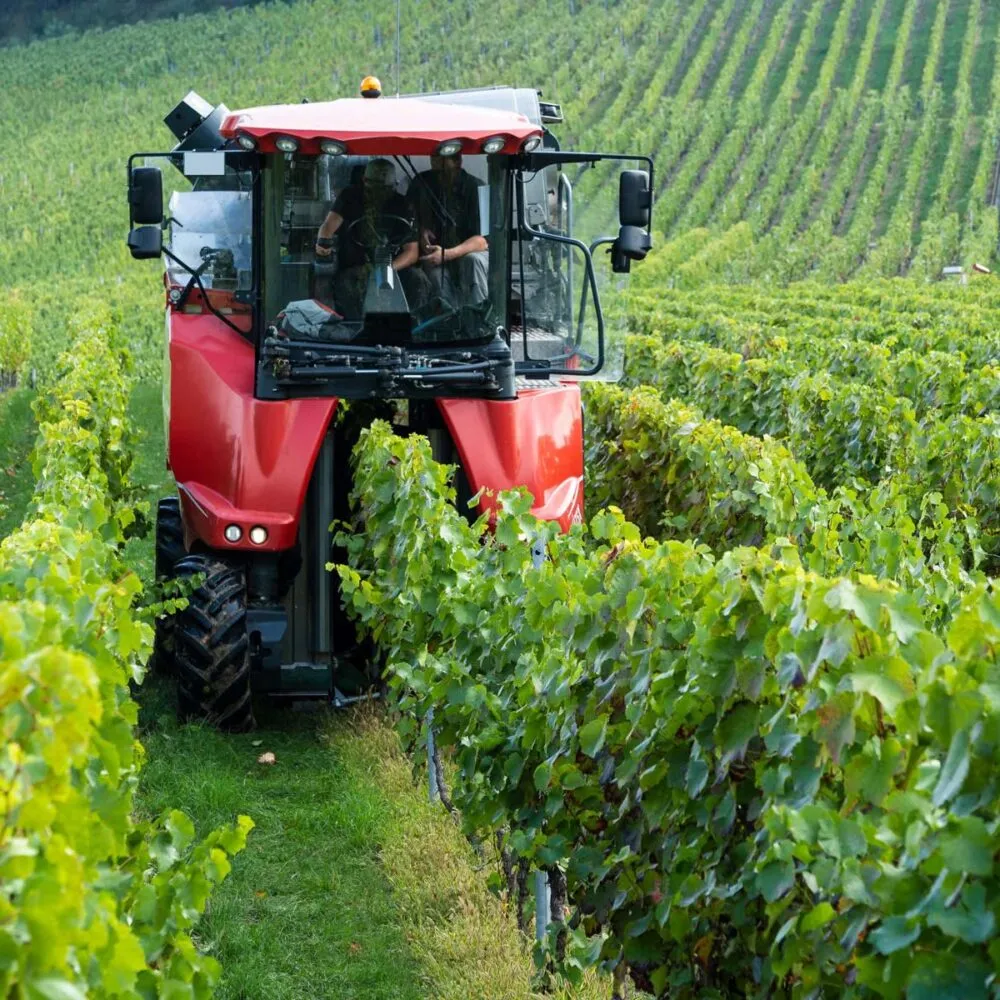
An angled brace between the end post and the adjacent line post transfers tension into the ground through both. This eliminates buried anchors entirely, at the cost of an additional post per row terminal. Common in Australia and New Zealand, where it is often preferred for ease of mechanical harvesting.

Burial depth determines how much soil resists movement. Standard commercial practice:
| Post type | Standard depth | Loose or sandy soil |
|---|---|---|
| Line posts | 50–70 cm | up to 80 cm |
| End posts | 70–90 cm | up to 100 cm |
End posts always go deeper than line posts. The additional buried length increases the soil volume mobilised against the wire tension, and terminal posts are where failures begin.
Clay soils usually hold adequately at standard depth. Rocky ground may physically limit how deep you can drive, in which case a braced assembly is often more practical than an anchor.
Concrete collars increase the effective diameter resisting lateral movement and can rescue a weak-soil installation. They also make future post replacement considerably harder — worth weighing before committing across an entire block.

An anchor is only as good as the post it restrains. Terminal posts concentrate the load of the whole row, and under-specifying them is the most common cause of trellis failure.
| Application | Section | Wall thickness | Typical use |
|---|---|---|---|
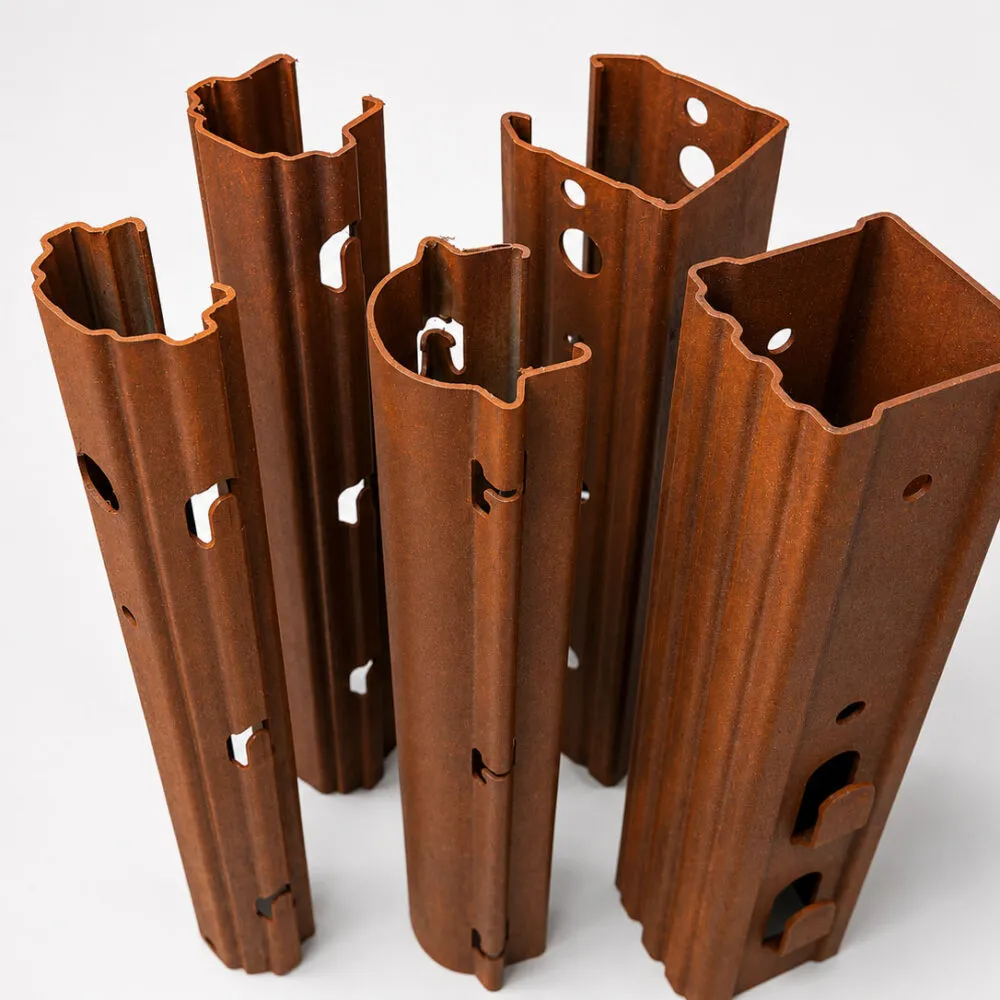
| End post “Strong” | 68 × 56 mm | 2.0–2.15 mm | Row terminals, anchor connection points |
| End post “Mini Strong” | 56 × 46 mm | 1.8 mm | Shorter rows, lighter terminal loads |
| Line post “Big” | 65 × 45 mm | 1.8–2.0 mm | Vigorous varieties, Sylvoz and GDC |
| Line post “Small” | 51 × 33 mm | 1.8–2.0 mm | Guyot and cordon, typical canopy loads |
Wall thickness is the specification most often compromised on price. Below roughly 1.5 mm, posts deform progressively under sustained load rather than failing outright, which makes the problem invisible until wire heights have already drifted.
Line post spacing of 5 metres suits most European VSP layouts. Australian and North American vineyards frequently run 6 to 7 metres, which increases the load carried by each post and the wire tension required to limit sag — plan spacing and post section together, not separately.

This deserves a more careful answer than it usually receives, because the two materials behave differently above and below ground level.
Hot-dip galvanised steel carries a zinc coating that protects sacrificially: the zinc corrodes preferentially and the steel beneath stays intact. This works in soil as well as in air, which is why galvanising remains the default choice for buried applications. Coating thickness determines service life.
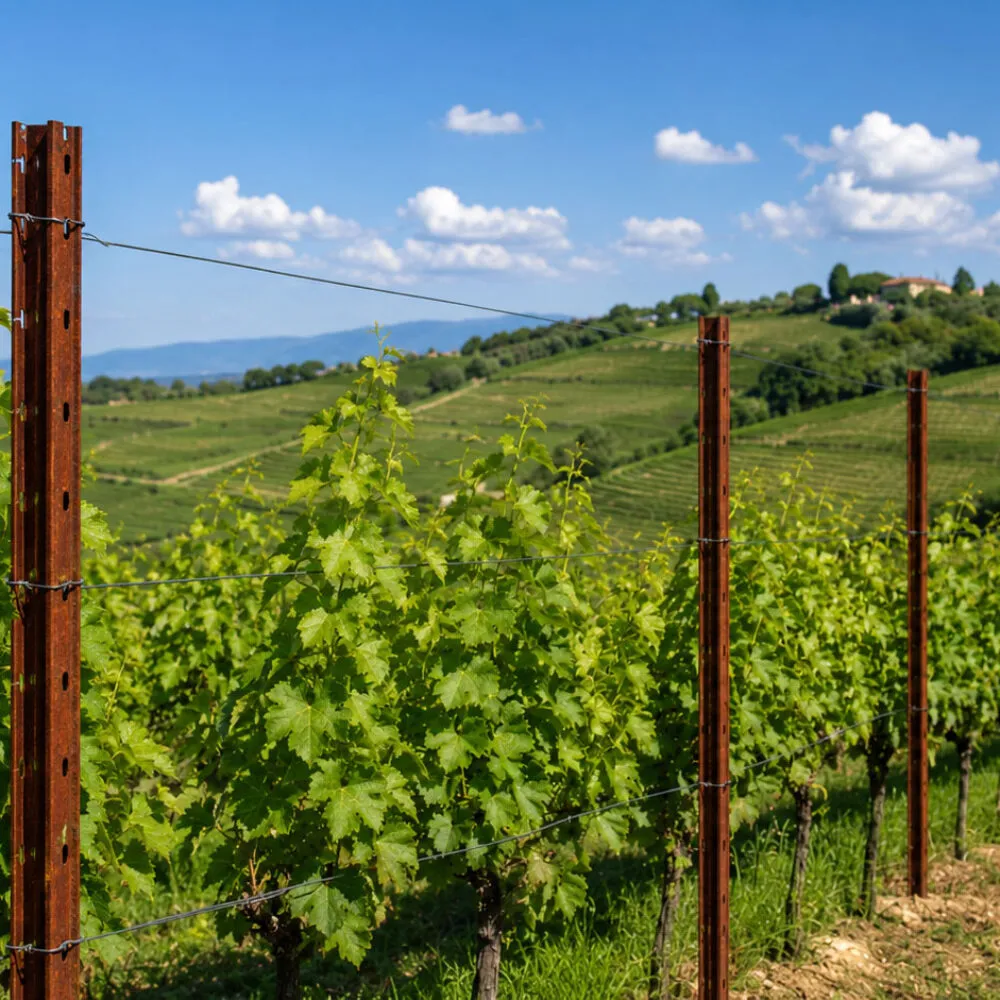
Corten (weathering) steel forms a stable protective patina only where it experiences alternating wet and dry cycles with free access to oxygen. Above ground it performs exceptionally, and the patina is self-repairing. Below ground it does not form that patina. Permanently damp, oxygen-poor soil prevents it, and the buried section continues to corrode.
This is not an argument against corten posts — it is an argument for understanding where their advantage lies. Corten’s benefit in a vineyard is the aesthetic of the exposed section and the material’s higher strength, which allows equivalent performance at reduced section. For the buried portion, what protects the post is wall thickness and, where specified, an additional coating.
Vineyards in coastal or permanently wet sites should specify galvanised below ground regardless of what is chosen above it.

A trellis is a system, and it fails at whichever component was specified last.


Between 100 and 250 kg per wire for high-tensile galvanised wire, depending on gauge and span. Higher tension reduces sag but increases the load on end posts and anchors, which must be sized accordingly.
70 to 90 cm in normal soils, up to 100 cm in loose or sandy ground. Line posts are set 50 to 70 cm.
Yes. A strainer or braced assembly transfers tension through an angled brace to an adjacent post, eliminating the buried anchor. It requires one additional post per row terminal.
Corten does not develop its protective patina in permanently damp soil, so the buried section corrodes like ordinary steel. Service life below ground depends on wall thickness rather than on the patina.
5 metres is standard for European VSP systems. 6 to 7 metres is common in Australia and North America, and requires a heavier post section and higher wire tension.
Undersized anchors, insufficient burial depth, or frost heave loosening the anchor connection. In almost all cases the post itself is not the failure point — the anchoring is.
Sika manufactures steel vineyard posts and trellis components from its plant in northern Italy, shipping more than 400,000 posts a year to over 40 countries. 25 years of experience years of specialised production inform the current range.
The posts described in this guide are produced by cold roll forming, with combined punching systems that accept multiple wire configurations and section openings that promote drainage and ventilation at soil level. Both hot-dip galvanised and corten variants are available, in the sections listed above. Manufacturing is certified to ISO 9001, ISO 14001 and ISO 45001.
Our technical team advises on post selection, spacing and anchoring method for specific soil and training-system combinations.

Fill out the form to receive the catalog and get a free, no-obligation quote within 24 hours.



Stay in touch with SIKA to keep up with news, offers and valuable advice from our experts!
We use Mailchimp as our marketing platform. By signing up, you agree that your information will be transferred to Mailchimp for processing. Learn more about Mailchimp’s privacy policy.