


Read also

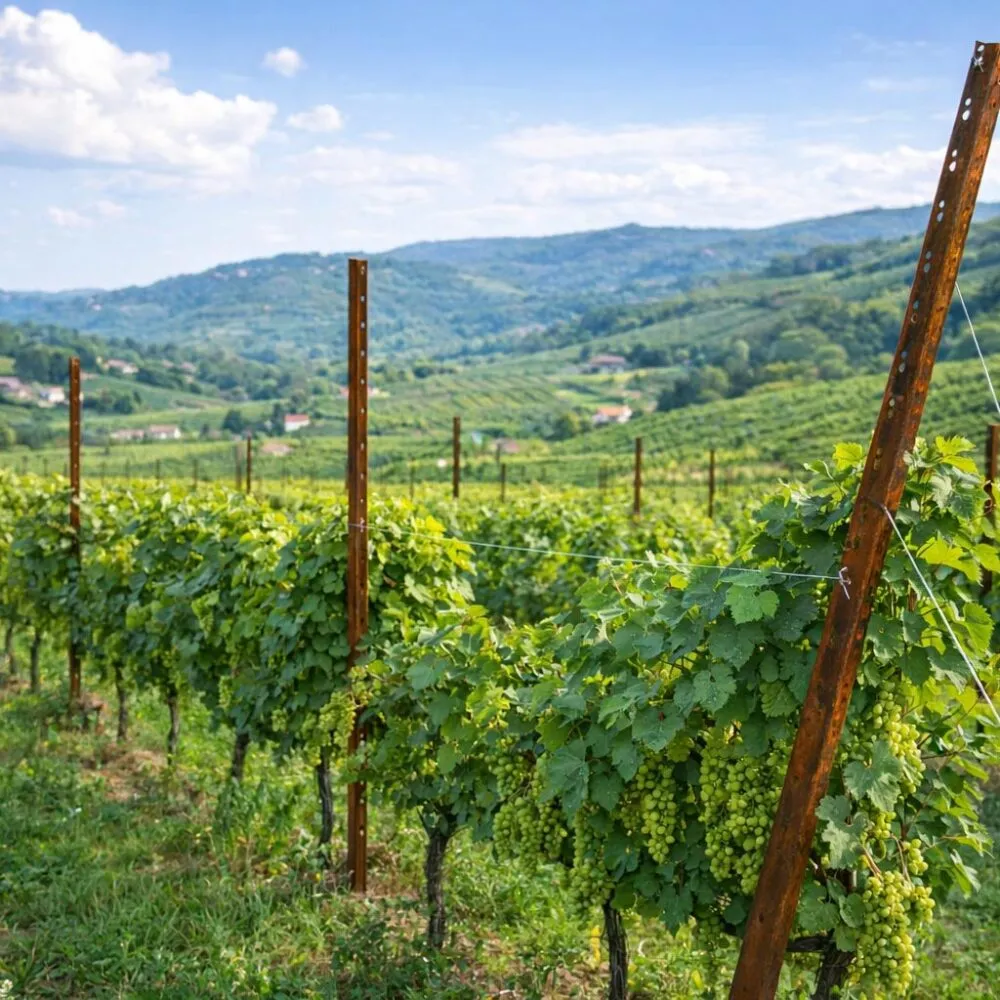

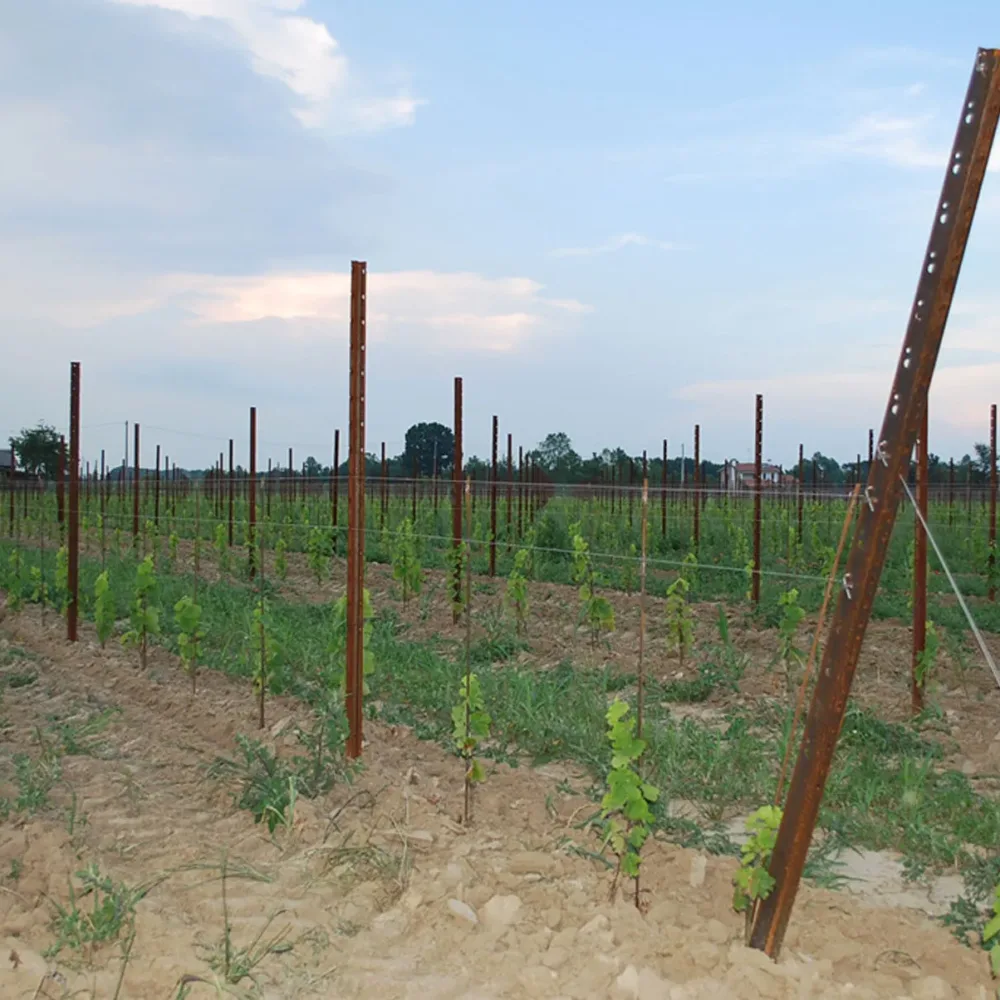

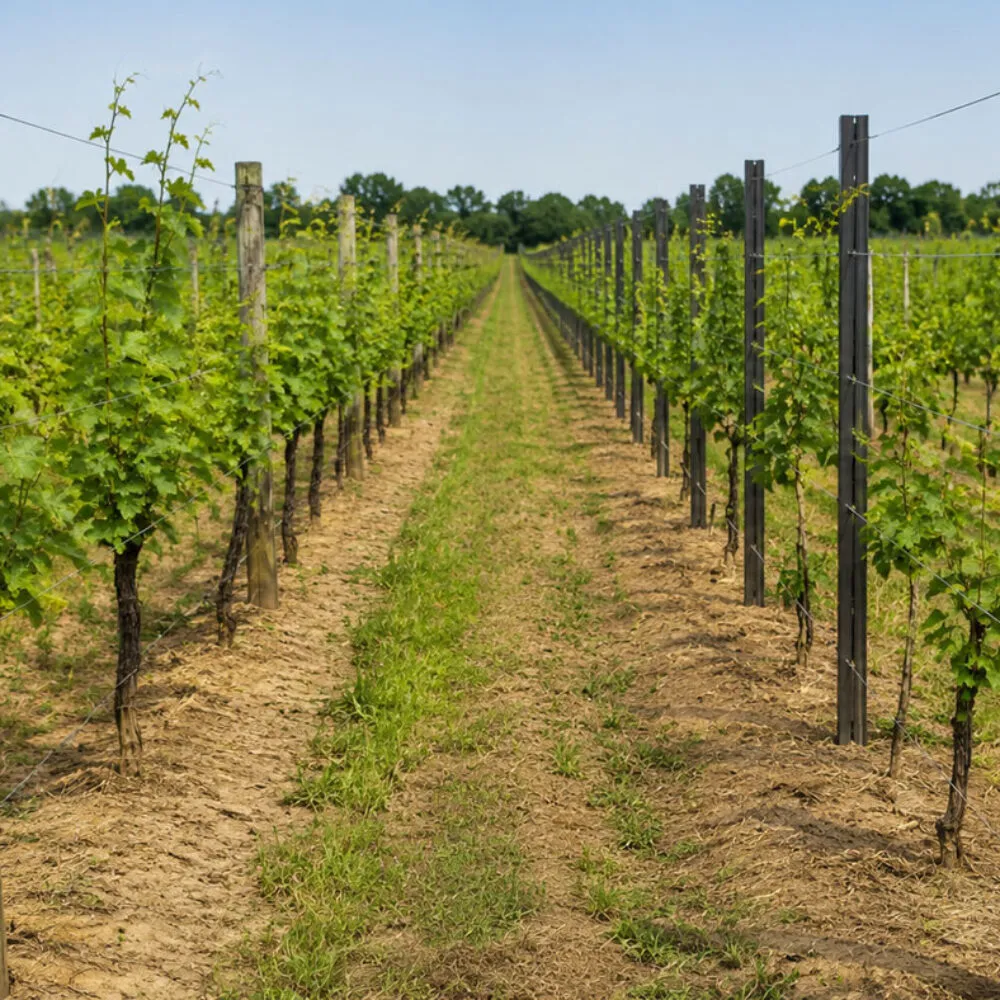
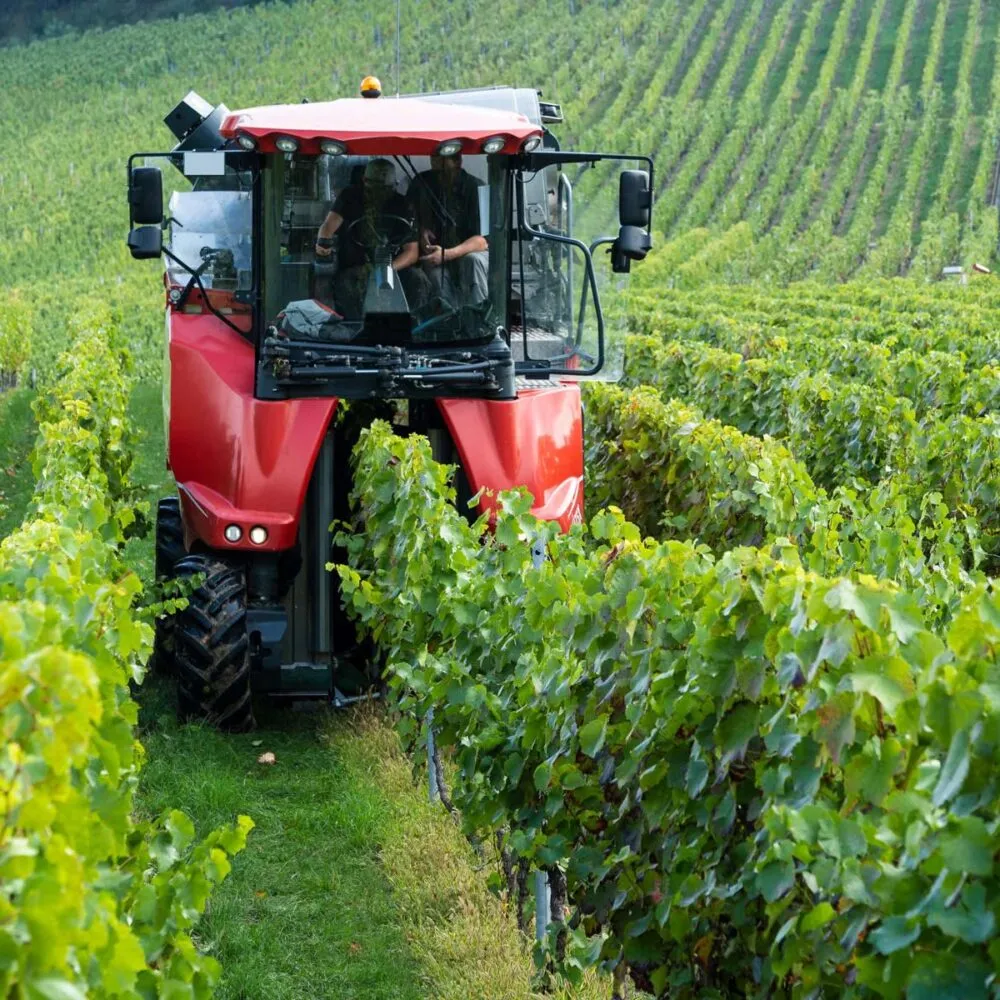
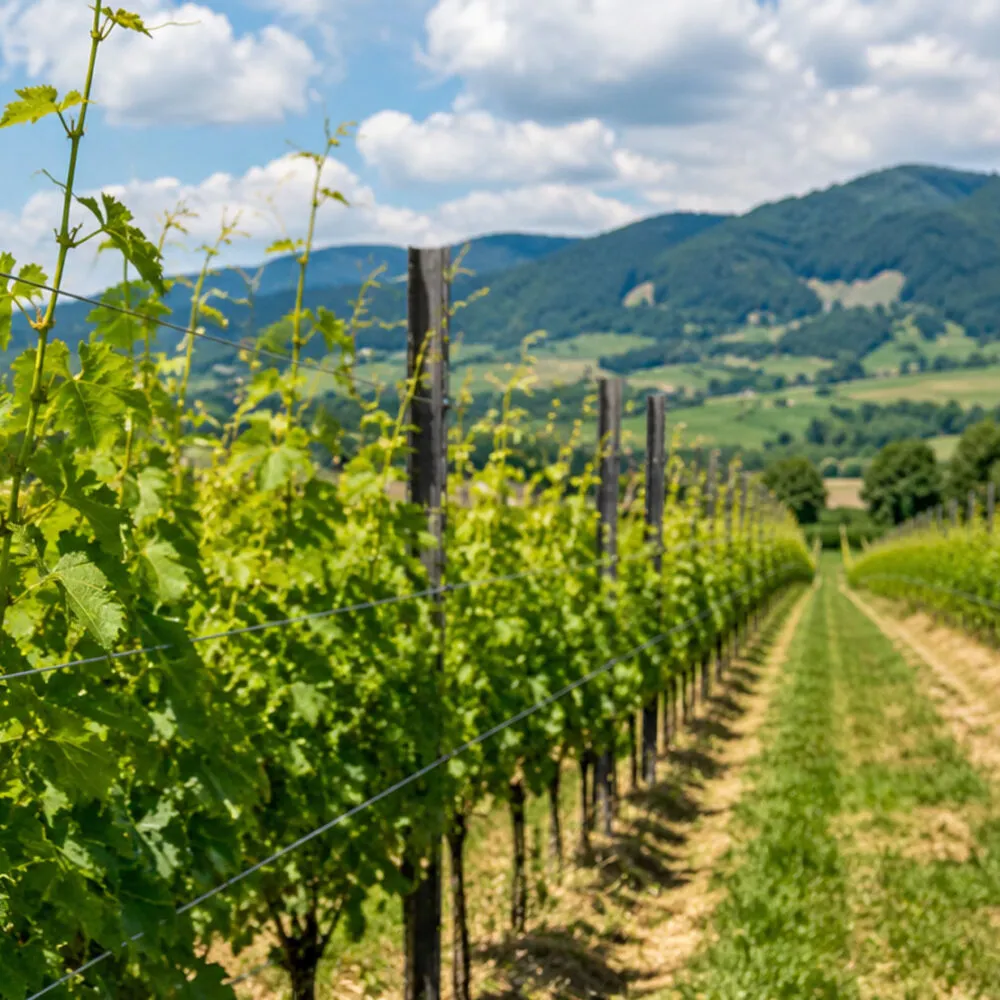
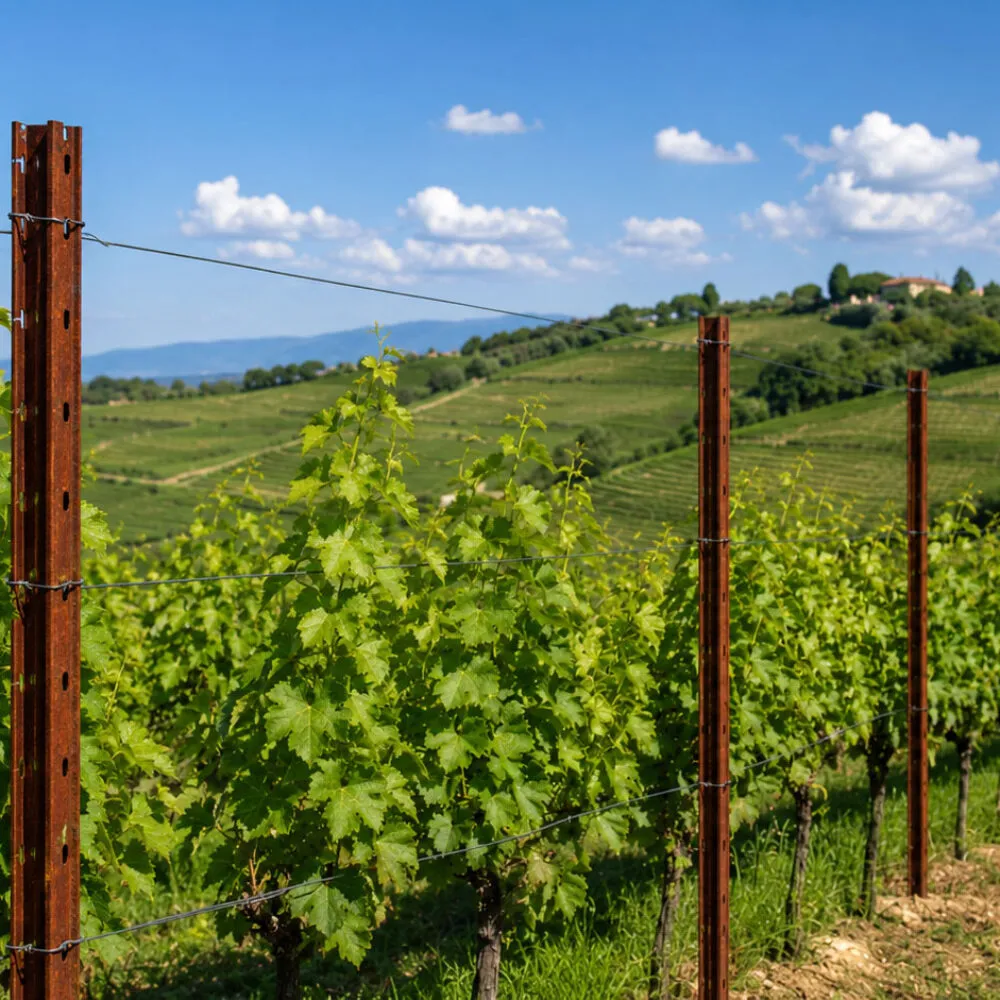
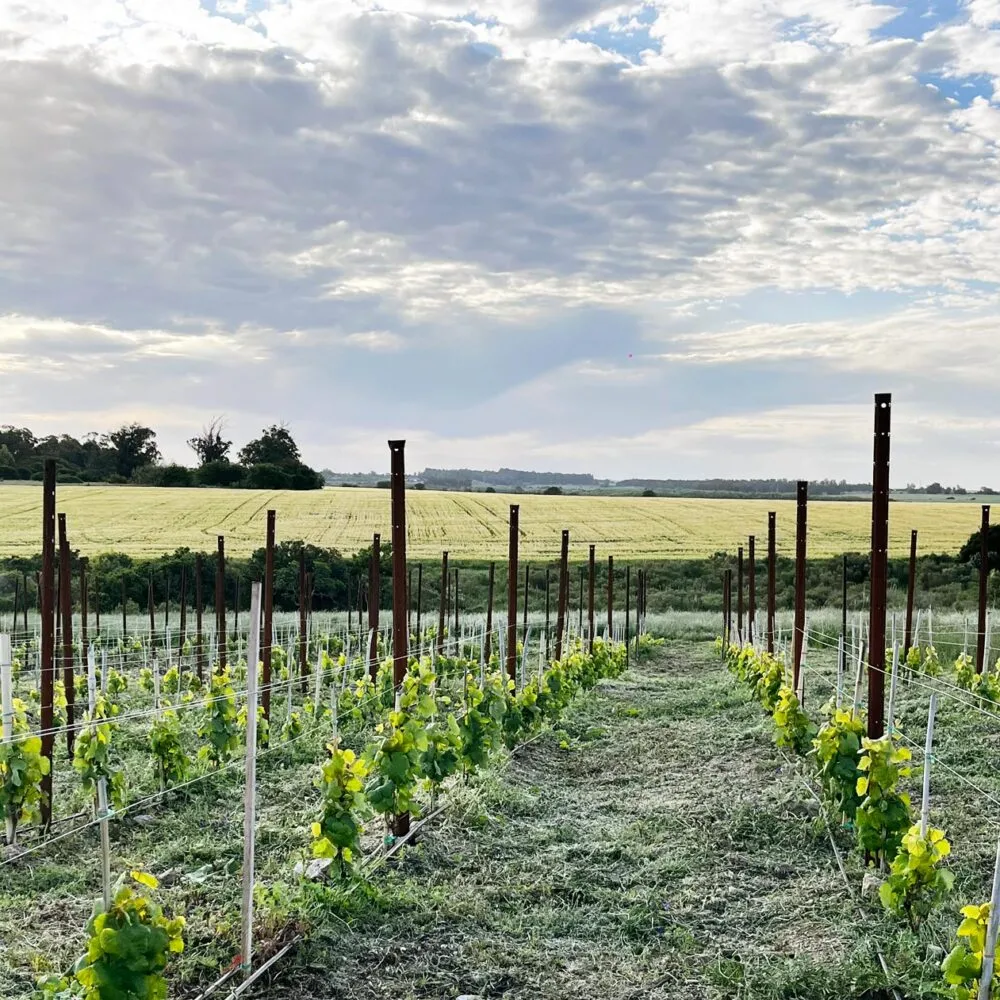


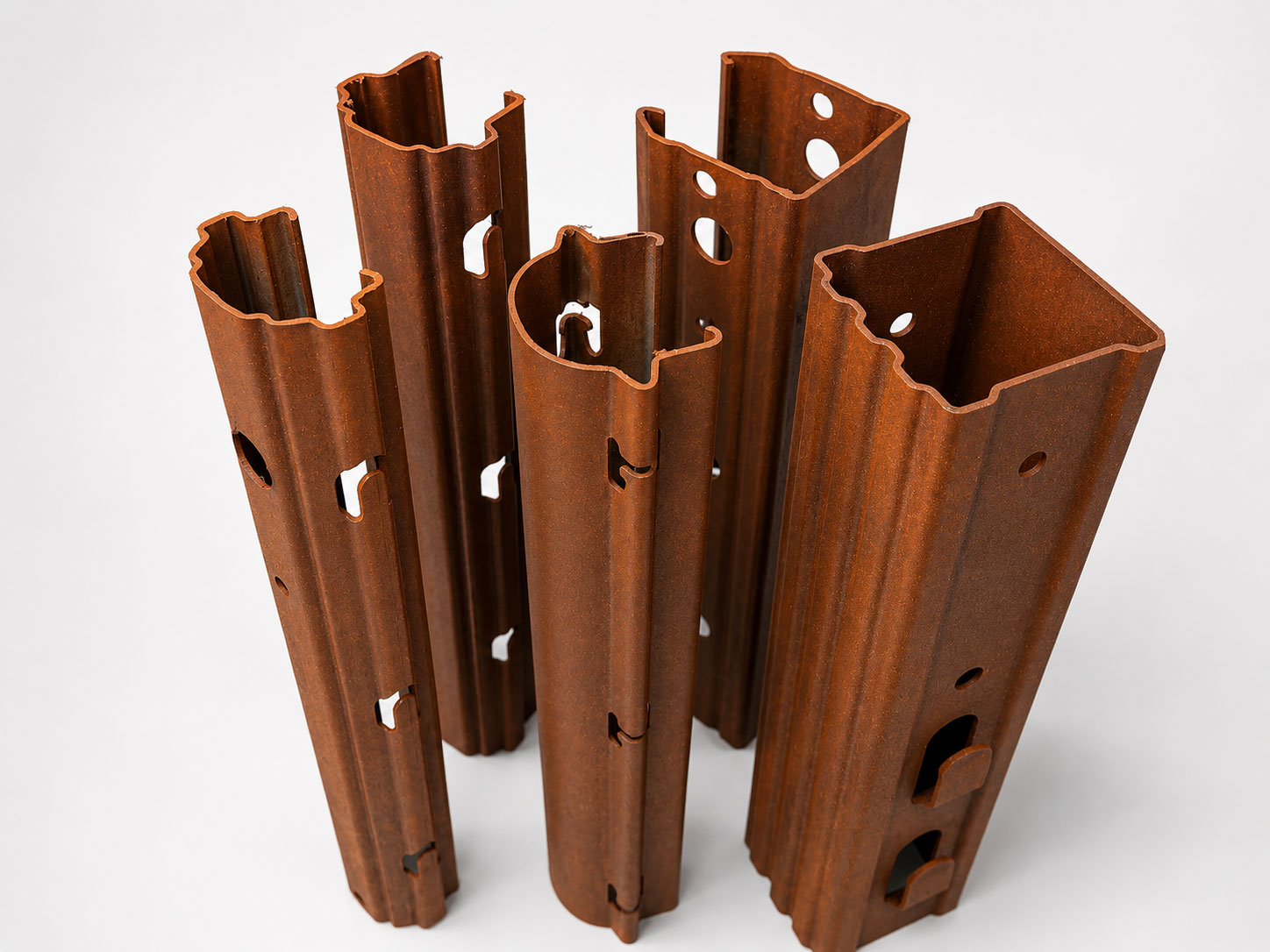
Proper vineyard post spacing represents one of the most fundamental decisions in vineyard infrastructure design, directly impacting structural integrity, long-term maintenance costs, and overall vineyard productivity. The distance between posts determines how effectively your trellis system can support the weight of mature vines, resist wind loads, and maintain wire tension throughout seasonal temperature variations. Incorrect spacing can lead to sagging wires, post failure, compromised canopy management, and ultimately reduced grape quality. Understanding the relationship between training systems, environmental conditions, grape varieties, and post spacing requirements enables vineyard managers to build resilient trellis structures that deliver reliable performance for decades.
Different grape varieties impose distinct structural demands on trellis systems based on their vigor characteristics, fruit load potential, and canopy architecture requirements.
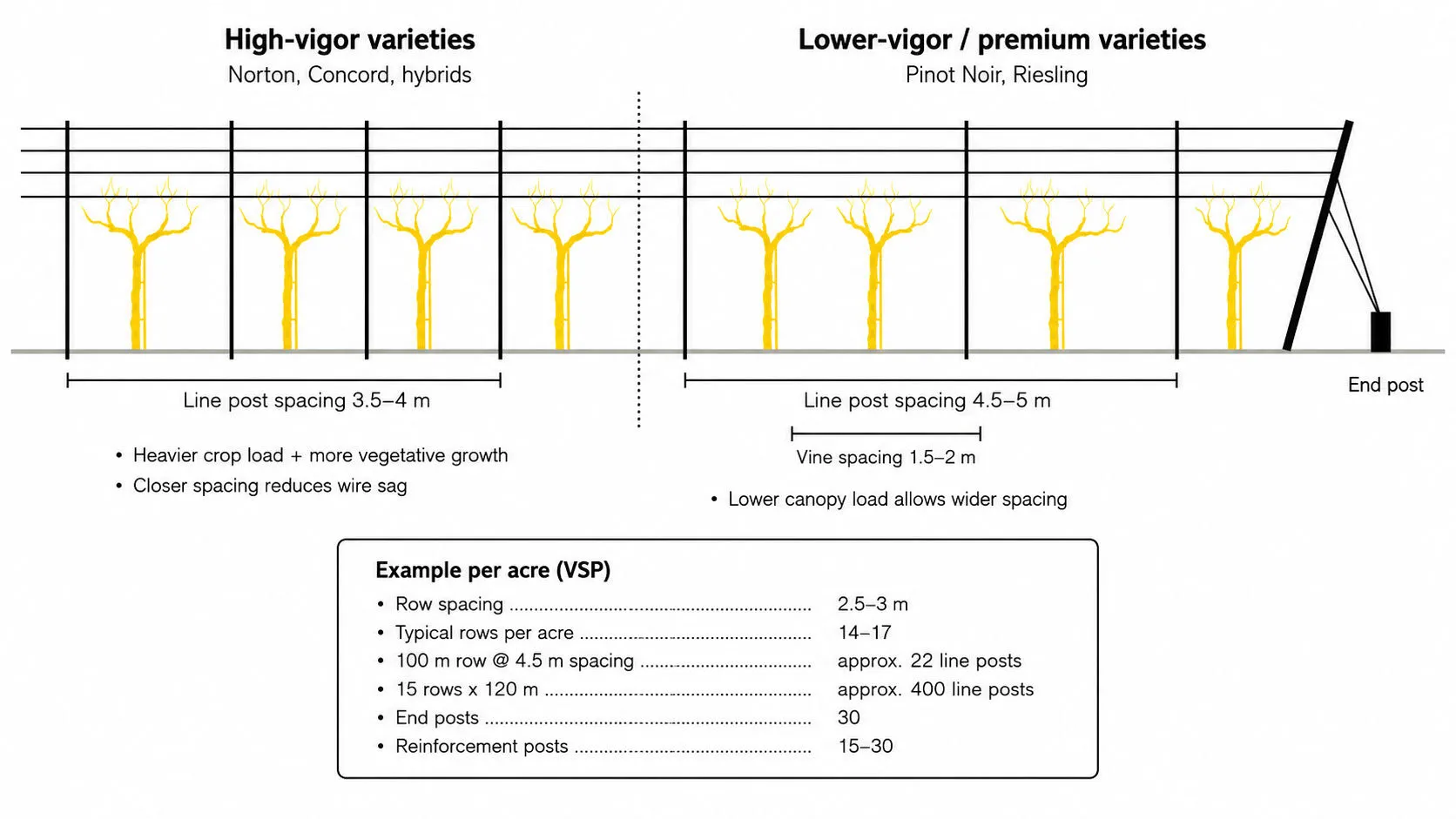
High-vigor varieties such as Norton, Concord, and many hybrid cultivars produce significantly more vegetative growth and heavier crop loads, generating greater downward force on trellis wires and increased lateral stress from wind exposure on their expansive canopies.
These vigorous varieties typically require closer post spacing to prevent excessive wire sag and maintain structural stability throughout the growing season. Spacing line posts every 4 to 5 meters (13 to 16 feet) represents the standard recommendation, though high-vigor sites may benefit from reducing this distance to 3.5 to 4 meters (11.5 to 13 feet) to accommodate the additional mechanical stress.
Additionally, varieties prone to excessive vigor may be trained on systems requiring taller posts with multiple wire heights, necessitating closer spacing to prevent top-heavy structural instability that could compromise the entire row under wind load or heavy fruit production years.
Conversely, lower-vigor varieties such as Pinot Noir, Riesling, and other premium wine grapes grown on moderate-fertility sites produce less vegetative mass and lighter crop loads, allowing for slightly wider post spacing without compromising trellis stability. The vine spacing within rows also influences post spacing decisions; when vines are planted at wider intervals (1.5 to 2 meters), the reduced density per linear meter decreases cumulative load on the trellis, potentially permitting maximum post spacing of up to 5 meters in favorable conditions.
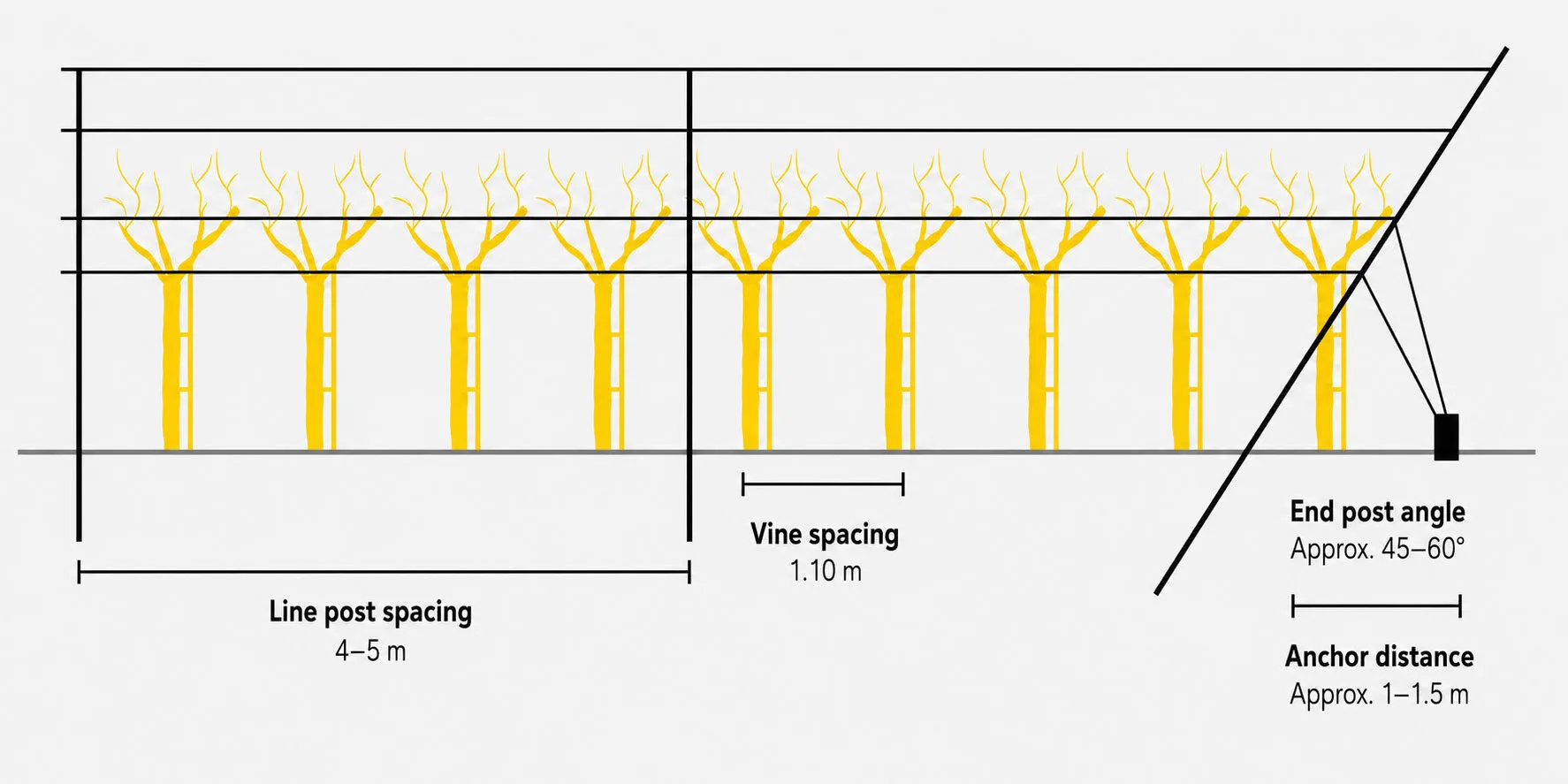
Determining the total number of vineyard posts required for your vineyard installation involves calculating both line posts and end posts based on row configuration, spacing parameters, and training system specifications.
The calculation begins with establishing row length and the number of rows per acre based on your selected row spacing.
For vertical shoot positioning systems with row spacing of 2.5 to 3 meters (8 to 10 feet), a typical acre accommodates approximately 14 to 17 rows. With standard line post spacing of 4.5 meters (approximately 15 feet) along each row, a 100-meter row requires approximately 22 line posts. Multiplying the number of posts per row by the total number of rows yields the line post requirement. Additionally, each row requires two end posts positioned at row terminals to anchor wire tension, meaning a vineyard with 15 rows needs 30 end posts.
For comprehensive planning, factor in reinforcement posts for rows exceeding 80 to 100 meters in length; these intermediate support posts, commonly called “rompitratta” in Italian viticulture, provide additional structural strength at vulnerable points and should be positioned strategically along extended rows. A complete calculation example: for a one-acre vineyard with 15 rows of 120 meters each, using 4.5-meter line post spacing, you would need approximately 400 line posts (15 rows × 27 posts per row), 30 end posts (2 per row), plus approximately 15 to 30 reinforcement posts depending on terrain exposure and wind conditions.
Different grapevine training systems demand specific post spacing configurations to optimize structural performance and vineyard management efficiency:
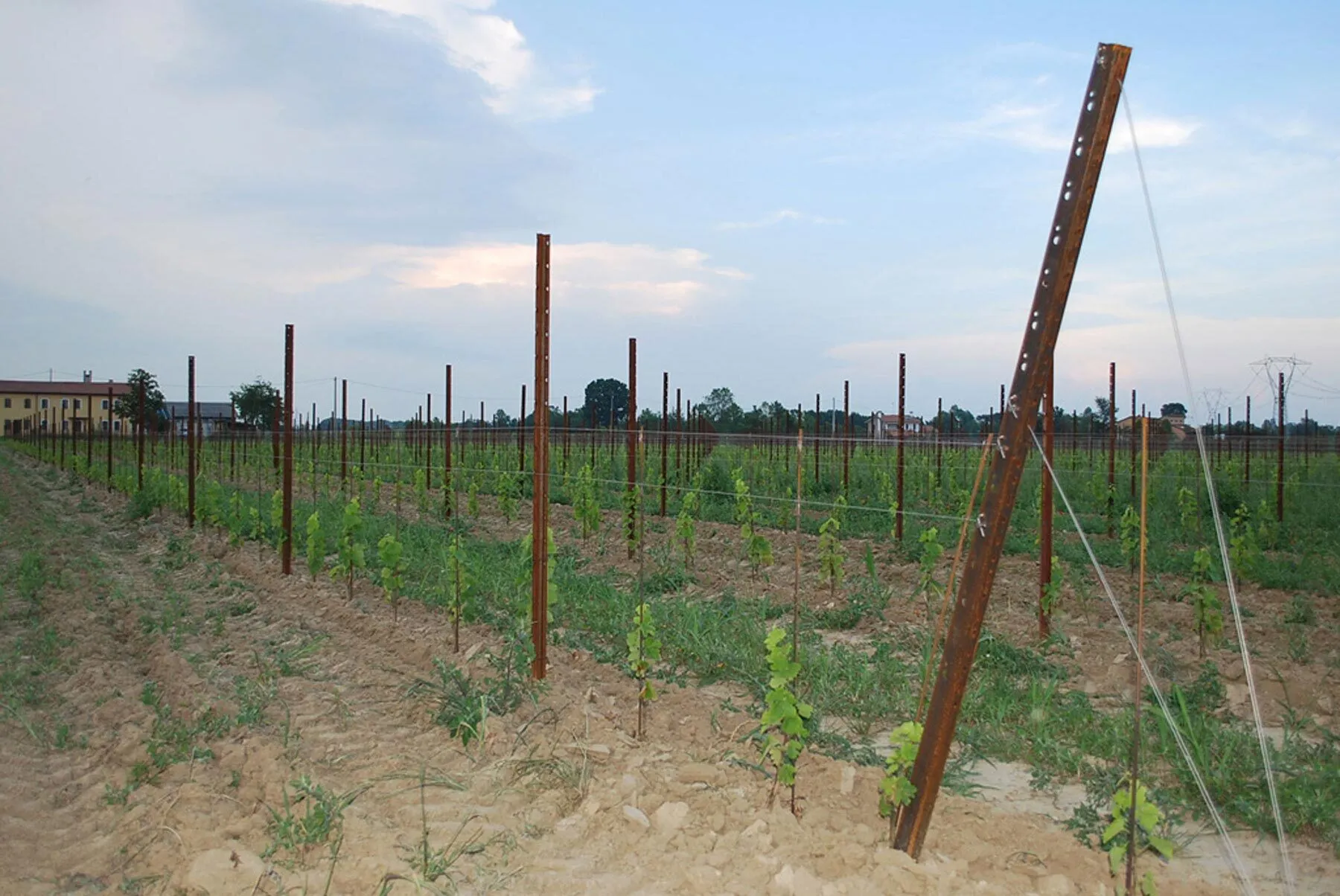
Wind exposure represents the single most significant environmental factor affecting optimal vineyard post spacing requirements. Vineyards located in regions with persistent strong winds or those positioned on exposed ridgetops, slopes facing prevailing winds, or open valley floors must utilize closer post spacing to resist the lateral forces that can destabilize trellis rows. In high-wind areas, reducing standard spacing from 5 meters to 3.5 to 4 meters provides the additional structural support necessary to prevent wire deflection and post failure during severe weather events.
Soil type and compaction also critically influence spacing decisions; loose, sandy soils or recently disturbed ground offer less resistance to post movement and may require closer spacing or deeper post installation to achieve equivalent stability compared to firm clay or well-compacted soils.
Terrain slope introduces additional complexity, as posts on steep gradients experience uneven load distribution, with downslope posts bearing greater tension forces than their upslope counterparts. Vineyards on slopes exceeding 15 percent may benefit from reducing post spacing by 0.5 to 1 meter compared to level-ground recommendations.
Temperature extremes that cause significant wire expansion and contraction throughout the annual cycle also factor into spacing optimization; regions experiencing wide seasonal temperature swings (greater than 40°C variation between winter lows and summer highs) place additional stress on trellis wires and posts, potentially warranting slightly closer spacing to accommodate the increased mechanical cycling. Finally, snow load in regions with significant winter accumulation adds substantial weight to trellis structures, requiring either closer post spacing or increased post diameter and material strength to prevent structural failure under heavy snow conditions.

The structural properties of vineyard post materials fundamentally determine the maximum achievable spacing before wire sag or post deflection becomes problematic.
Premium galvanized steel posts manufactured through cold-rolling processes with sheet metal thickness ranging from 1.8 to 2.0 mm can safely span greater distances than wooden alternatives due to their superior strength-to-weight ratio and resistance to bending.
Steel posts featuring innovative combined punching systems and rounded profiles specifically engineered to enhance resistance to twisting forces maintain structural integrity at spacing intervals up to 5 meters in standard applications, while wooden posts of equivalent diameter typically require spacing of 4 to 4.5 meters maximum to prevent deflection under similar load conditions.
Corten steel posts offer comparable structural performance to galvanized alternatives while developing a protective patina that enhances long-term corrosion resistance, making them suitable for maximum spacing intervals without compromising structural longevity.
The critical difference lies in the post’s ability to resist the bending moment created by wire tension and lateral wind loads; higher-strength materials permit greater spacing while maintaining acceptable deflection limits.
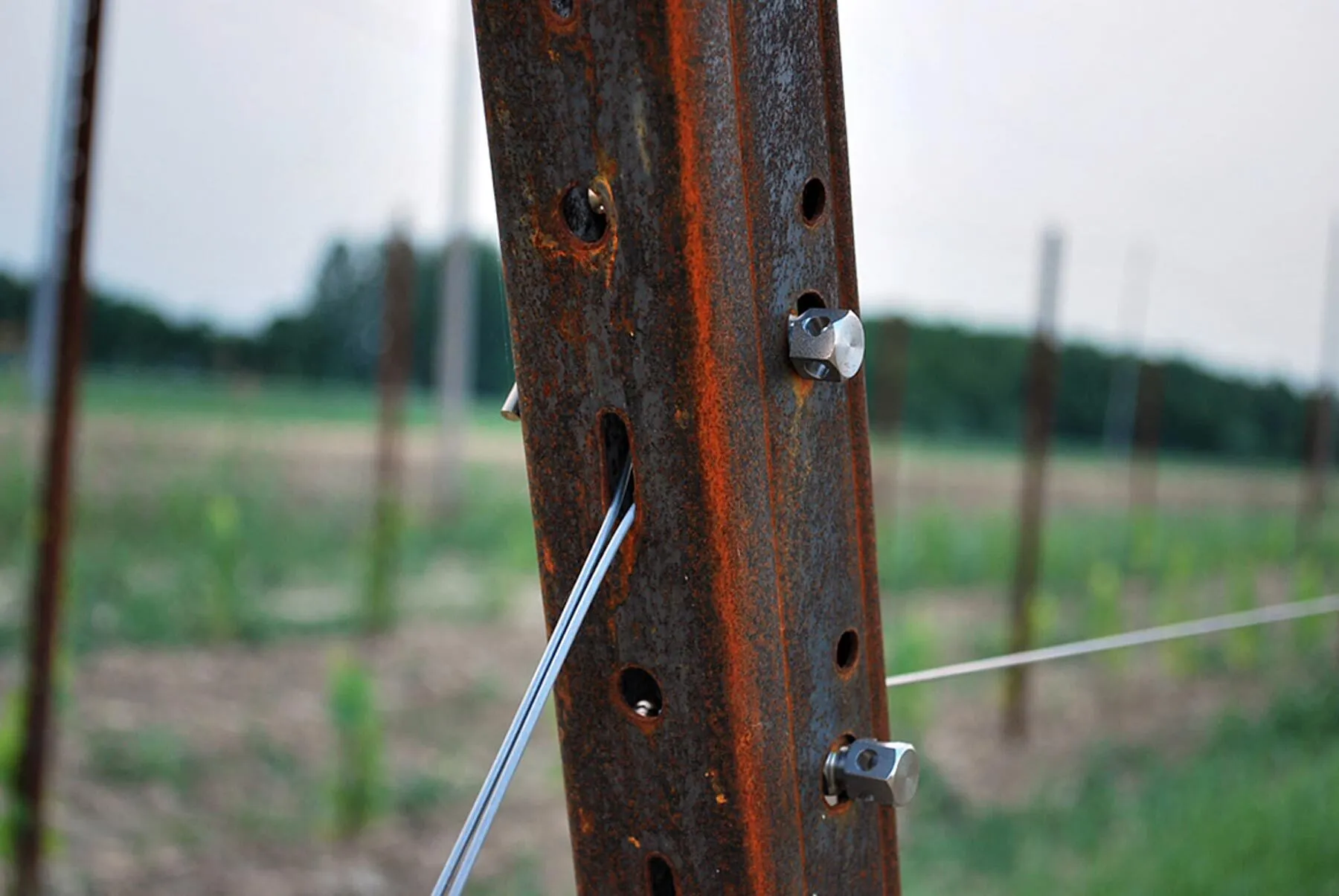
Section design also influences spacing capability; posts with section openings that ensure ventilation at the soil contact point prevent condensation buildup and subsurface corrosion that could weaken posts over time and necessitate premature replacement.
When planning post spacing, material selection must account for both initial structural capacity and long-term performance degradation; steel posts maintaining their structural properties for 30 to 40 years support consistent spacing throughout the vineyard’s productive lifetime, while wooden posts that weaken over 10 to 15 years may require interim post addition or complete replacement, effectively increasing long-term material costs despite lower initial investment.
Achieving precise post spacing during installation ensures uniform wire tension, simplified vineyard management, and optimal structural performance throughout the trellis system’s lifespan. Begin by establishing accurately measured row endpoints using surveying equipment or GPS technology to ensure parallel rows and proper alignment with access lanes and end-row turnaround spaces.
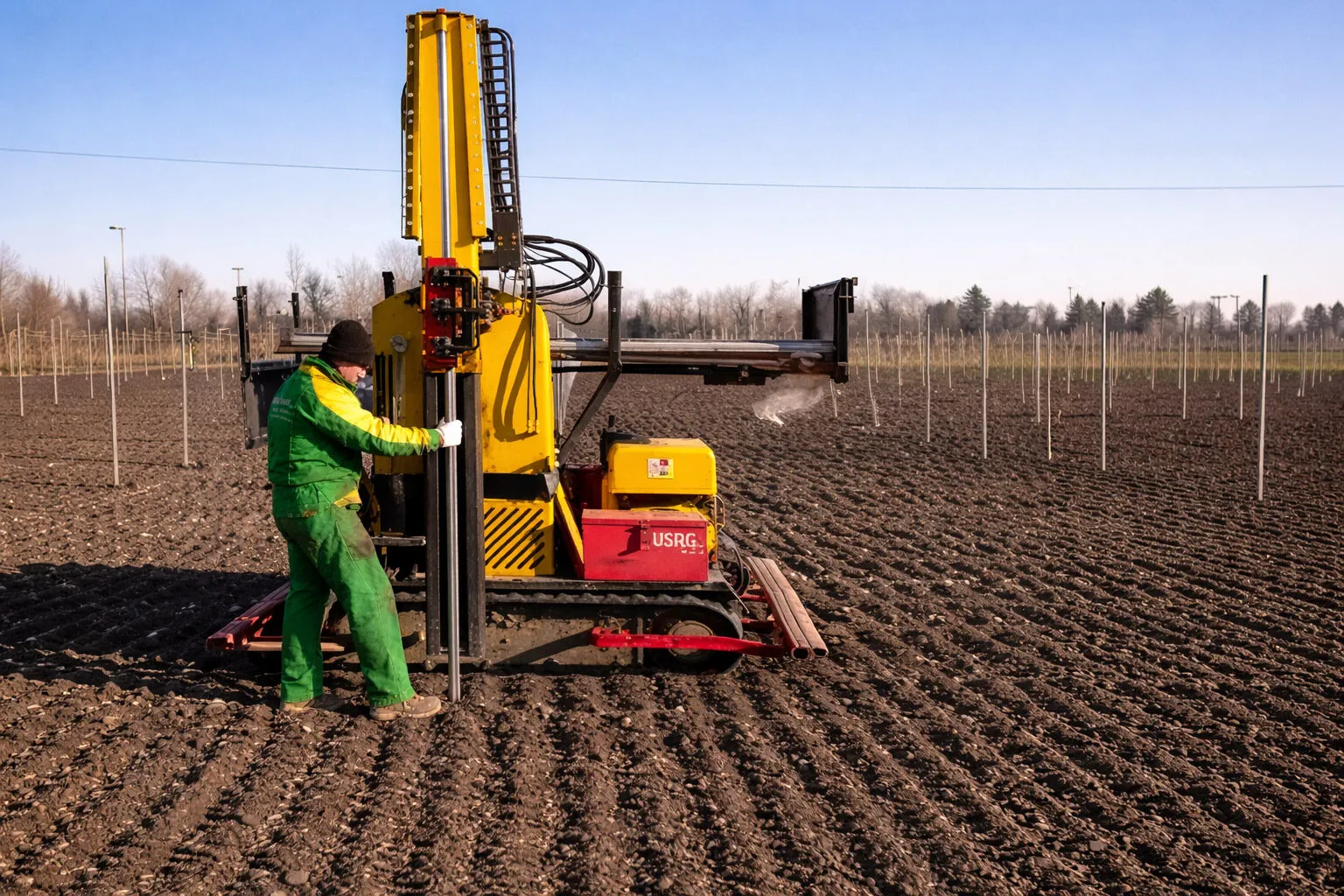
Mark line post positions along each row using a measuring tape or laser distance meter, physically marking each location with spray paint or stakes before beginning post installation. This pre-marking process allows for adjustment of spacing to accommodate terrain irregularities, rock outcroppings, or other obstacles without disrupting the overall spacing pattern. When installing posts, use appropriate equipment matched to post type and soil conditions; steel posts typically install using pneumatic post drivers that deliver consistent burial depth and vertical alignment, while augers may be necessary for rocky or heavily compacted soils to pre-drill installation holes.
Maintain consistent burial depth throughout the vineyard, with line posts typically buried 60 to 70 cm deep to ensure long-term stability and frost protection in cold climates. End posts require deeper burial of 70 to 90 cm and should be positioned at angles between 45 and 60 degrees relative to the ground to effectively resist wire tension forces that can reach several hundred kilograms per row terminal.
Use a post level or laser level during installation to ensure vertical alignment of line posts, as even minor deviations compound across multiple posts and create wire tension irregularities that compromise trellis performance.
After installing the initial posts in each row, string a guide wire or line between end posts at the planned fruiting wire height to verify spacing accuracy and alignment before installing remaining line posts. This verification step prevents compounding errors that become difficult to correct once the entire row is installed and wired.
When implementing proper vineyard post spacing strategies, the quality and precision of your post materials directly determine long-term system reliability and performance.
SIKA specializes in manufacturing premium galvanized steel and corten steel vineyard posts specifically engineered to maximize structural performance across all standard spacing configurations. With over 23 years of experience producing and delivering more than 400,000 posts annually to vineyards in 40+ countries including the United States, New Zealand, Australia, South Africa, Uruguay, Canada, Argentina, France, Germany, Spain, and the United Kingdom, SIKA has established itself as a global leader in vineyard trellis solutions.
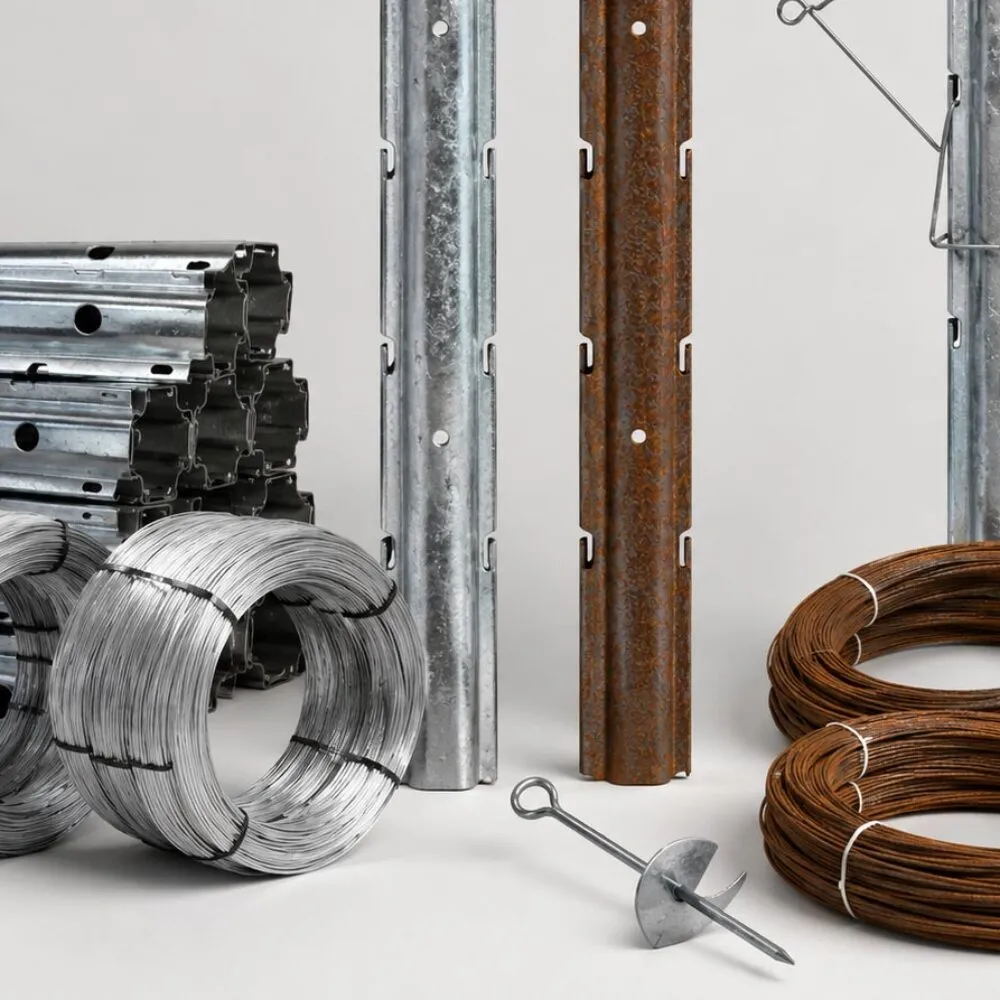
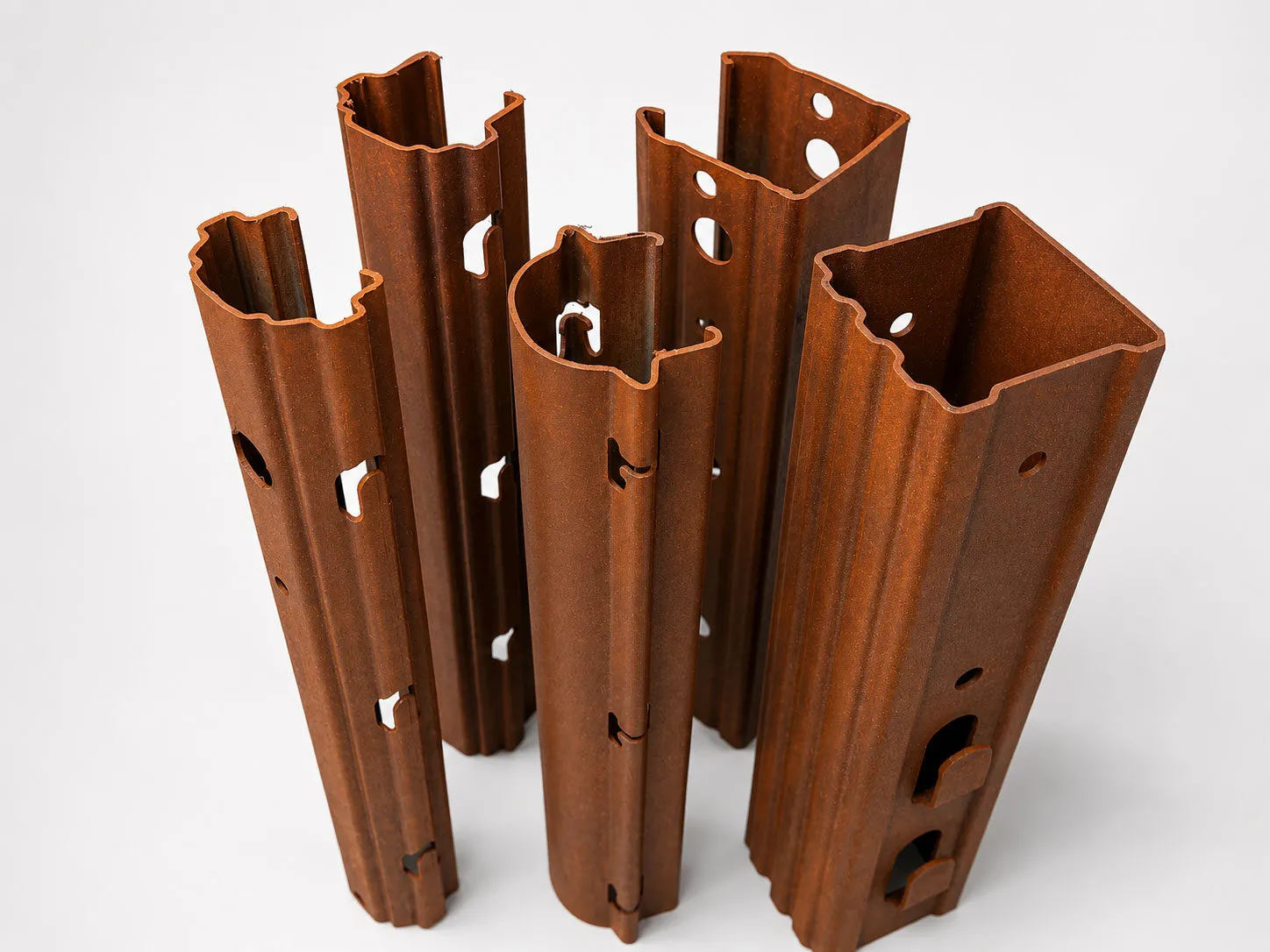
SIKA posts are manufactured through advanced cold-rolling processes using premium Italian steel, featuring innovative combined punching systems that accommodate multiple training system configurations while enhancing resistance to bending and twisting forces. The rounded profile design with strategic section openings ensures excellent ventilation at the soil contact point, preventing condensation buildup that accelerates corrosion and compromises long-term structural integrity.
Available in multiple dimensions including 65×45 mm, 51×41 mm, and other configurations, with sheet metal thickness ranging from 1.8 to 2.0 mm, SIKA posts support maximum spacing intervals of 4 to 5 meters for standard applications while maintaining exceptional stability even in high-wind exposure conditions.
Hot-dip galvanization applied after manufacturing provides superior corrosion protection compared to pre-galvanized materials, extending service life beyond 40 years in typical vineyard environments.
As an ISO 9001, 14001, and 45001 certified company, SIKA guarantees that every post meets exacting dimensional tolerances and material specifications essential for achieving the precise spacing accuracy required for professional vineyard installations. SIKA’s comprehensive product line also includes complete vineyard trellis accessories such as wire tensioners, spring tensioners, stainless steel vineyard ties, anchors, wire hooks, and wire spacers that work synergistically with properly spaced posts to create integrated trellis systems optimized for structural performance and vineyard management efficiency.
With dedicated pre and post-sales support and personalized consultancy services, SIKA assists vineyard managers in determining optimal post spacing configurations tailored to specific site conditions, training systems, and production objectives, ensuring your trellis infrastructure investment delivers reliable performance throughout decades of wine production.
Contact us for more information.

Fill out the form to receive the catalog and get a free, no-obligation quote within 24 hours.



Stay in touch with SIKA to keep up with news, offers and valuable advice from our experts!
We use Mailchimp as our marketing platform. By signing up, you agree that your information will be transferred to Mailchimp for processing. Learn more about Mailchimp’s privacy policy.