Read also

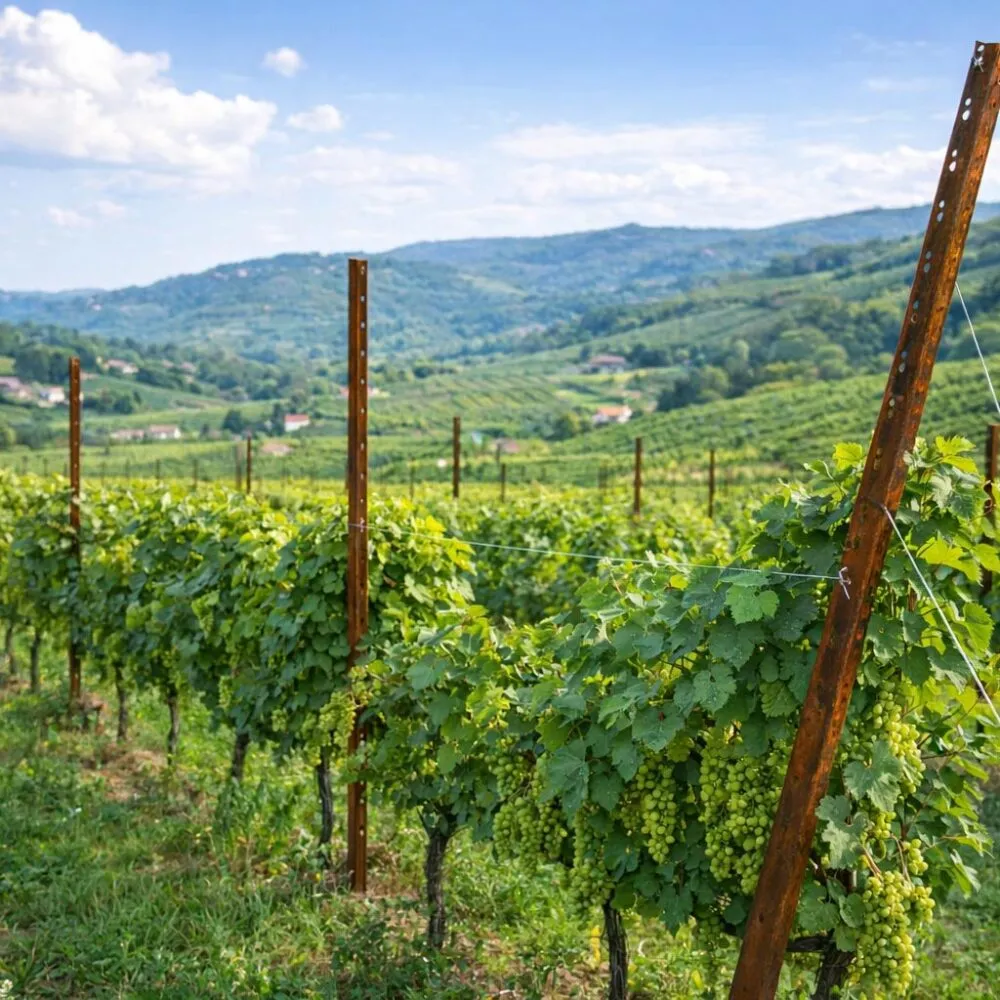

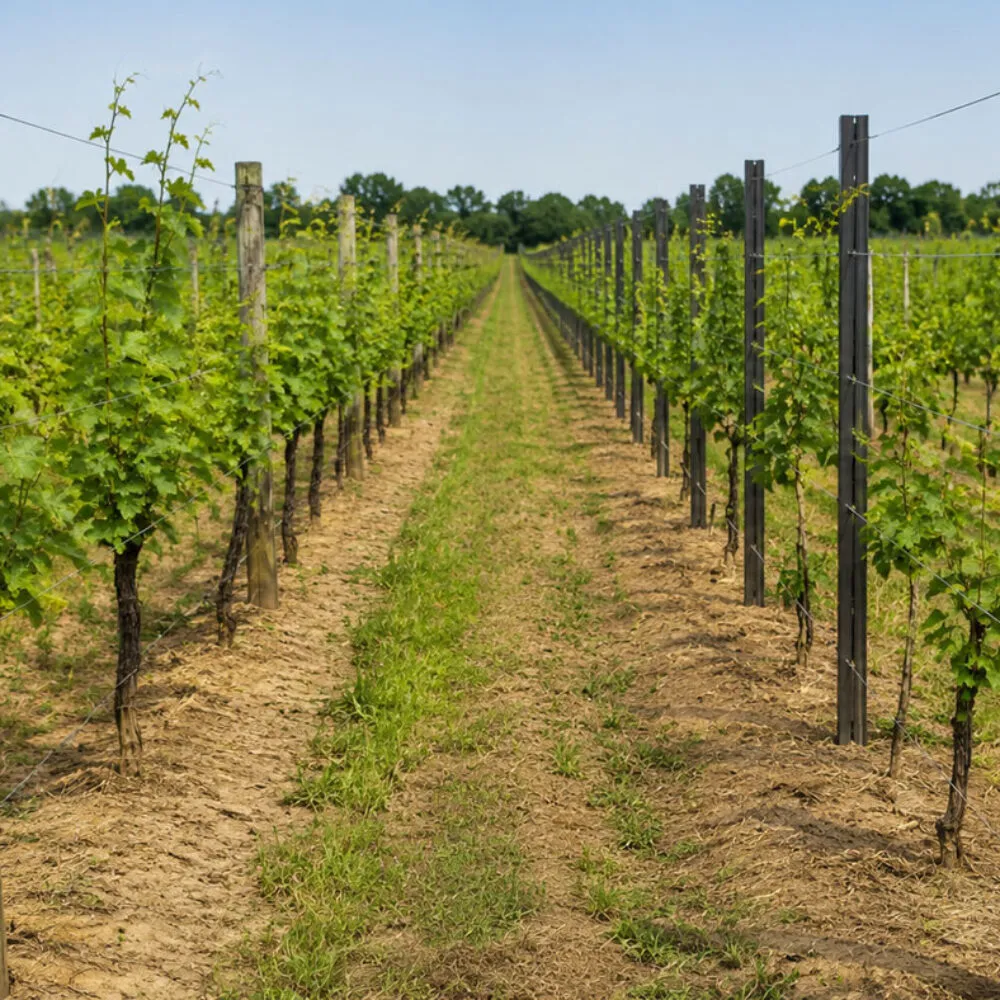
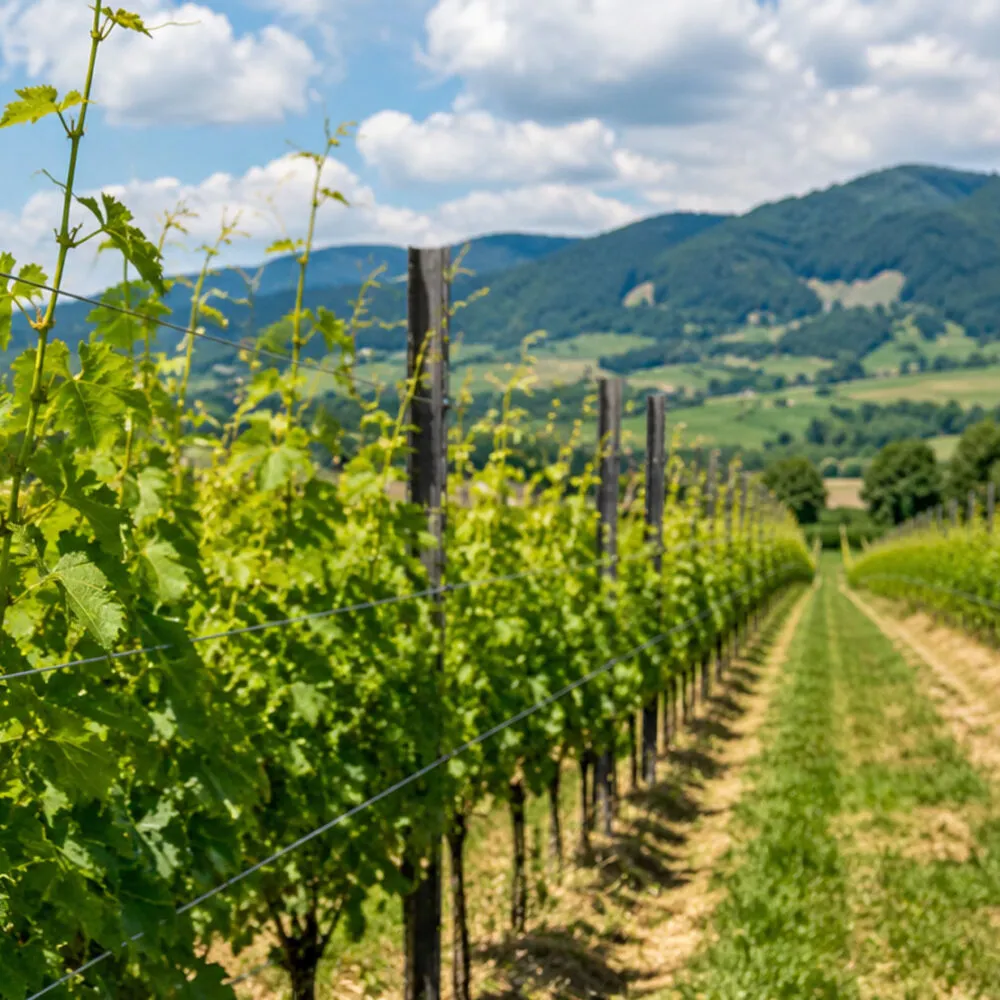
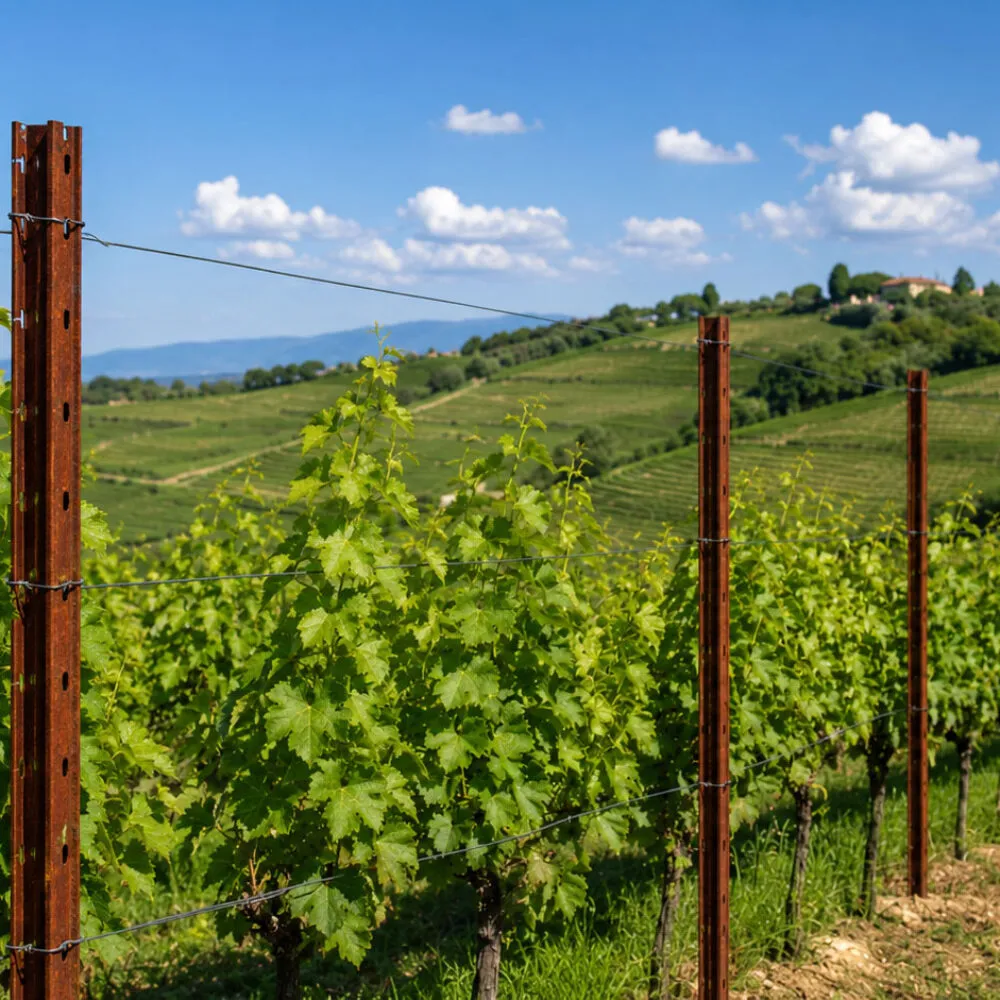
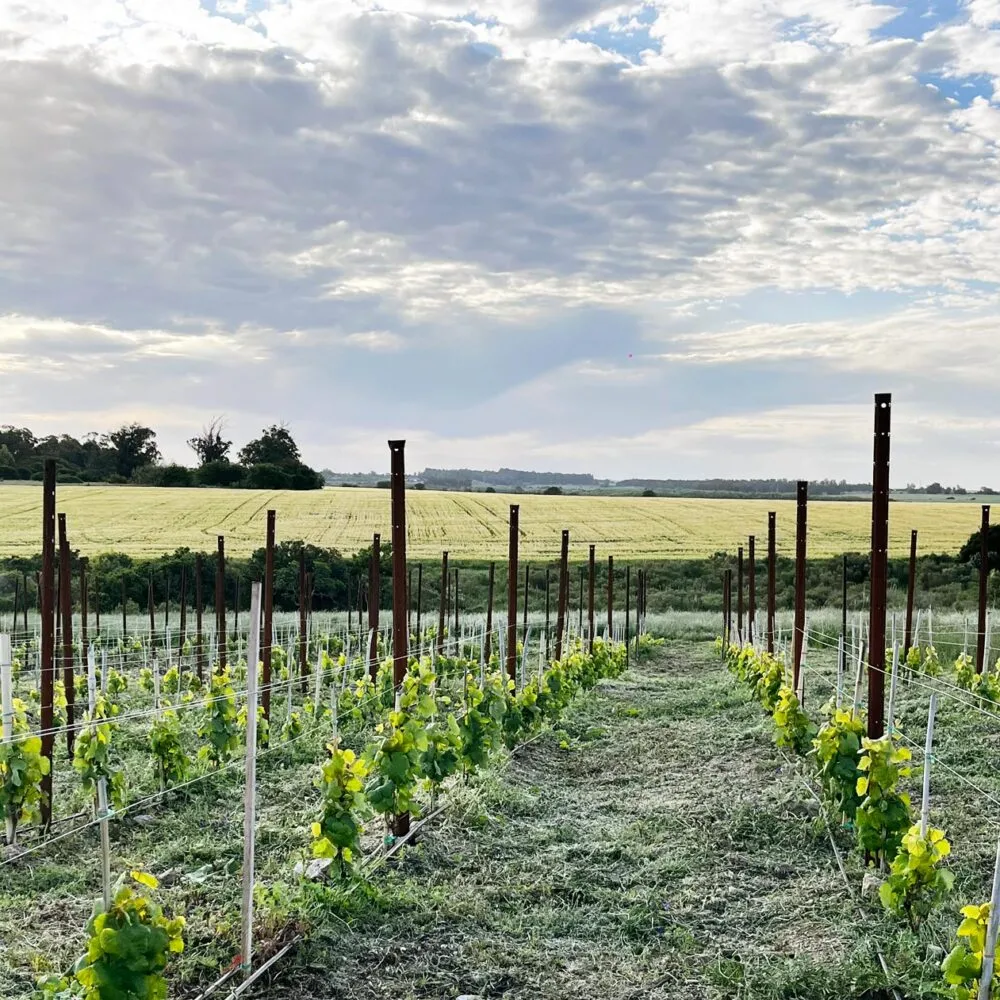


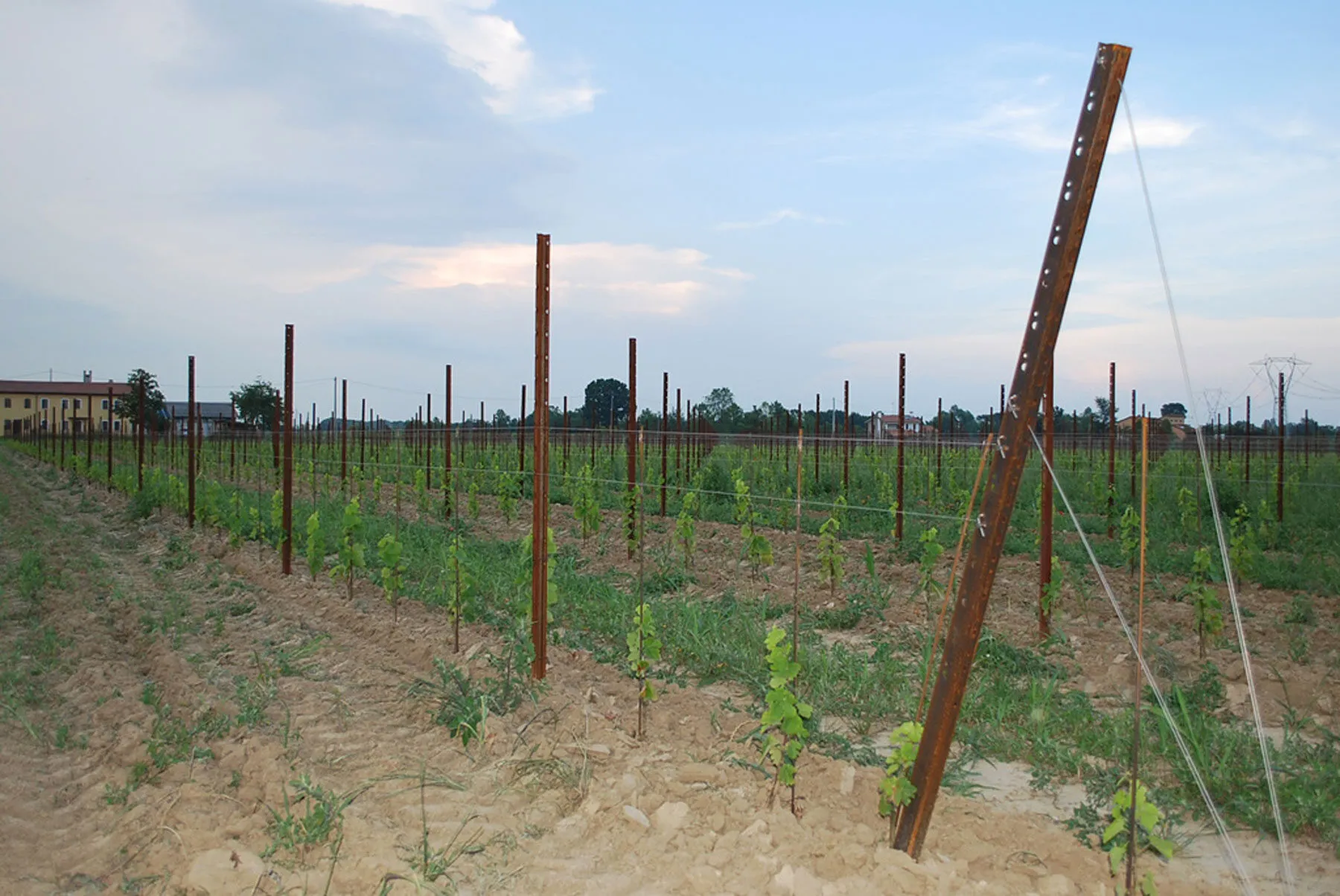
The wire carries the crop. Posts hold the structure up, but it is the grape trellis wire that supports the canopy, transfers the load to the end posts and determines whether the row stays aligned through harvest. Get the gauge or the tension wrong and the problem shows up two seasons later, when correcting it means working the whole block.
This guide covers wire gauge, material, number of wires, spacing by training system and tension values.
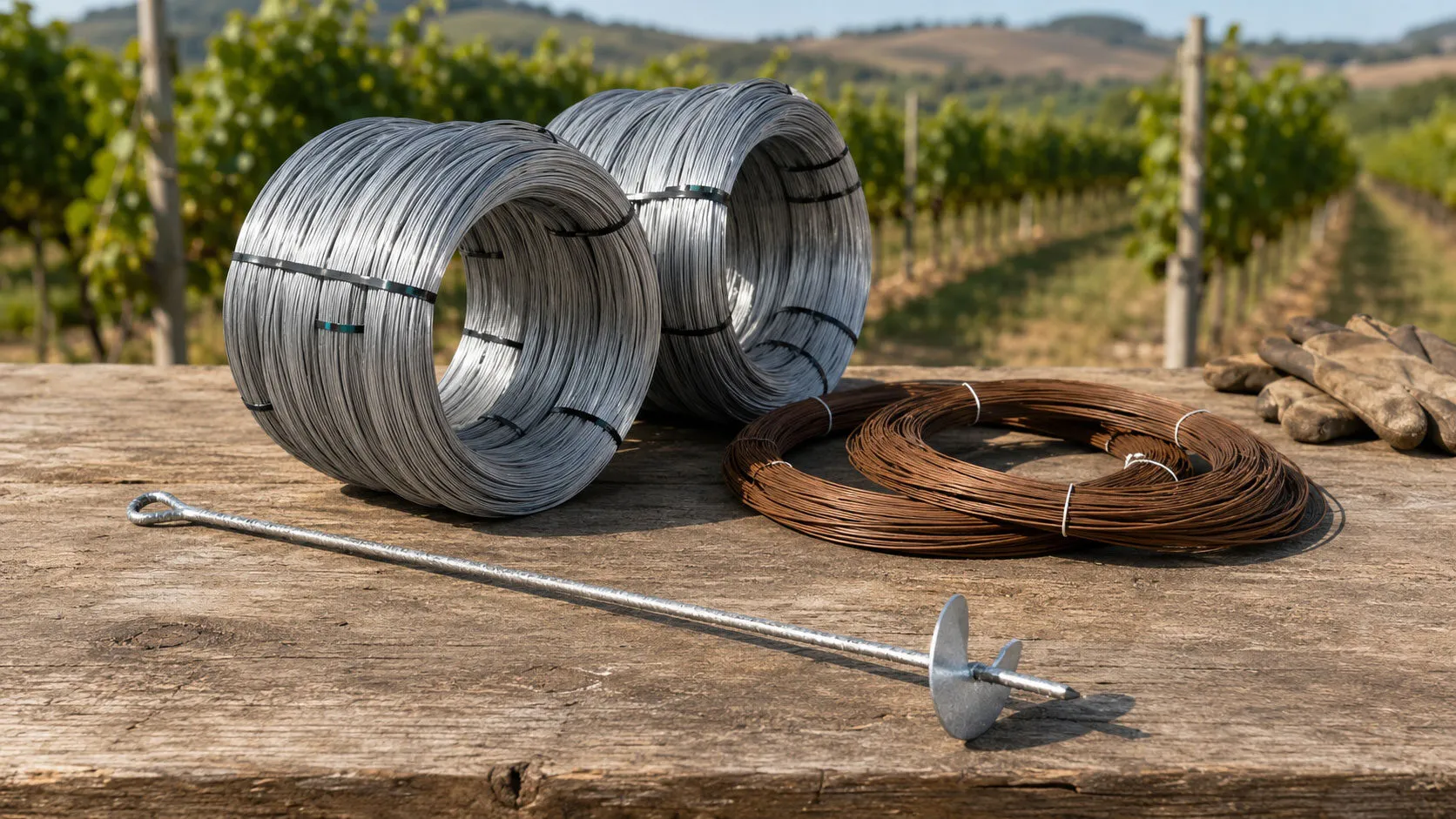
For commercial vineyards, 12.5 gauge (2.5 mm) high-tensile galvanised wire is the standard for the fruiting wire — the one carrying the permanent load of the cordon and the crop.
For moveable foliage wires, which carry only the shoots during the growing season, 13 to 14 gauge (2.0 to 2.2 mm) is sufficient and easier to raise and lower by hand.
Lighter gauges stretch under sustained load. The wire does not break: it elongates, the row sags, and the canopy drops out of position. That failure is gradual enough to go unnoticed until the geometry has already shifted.
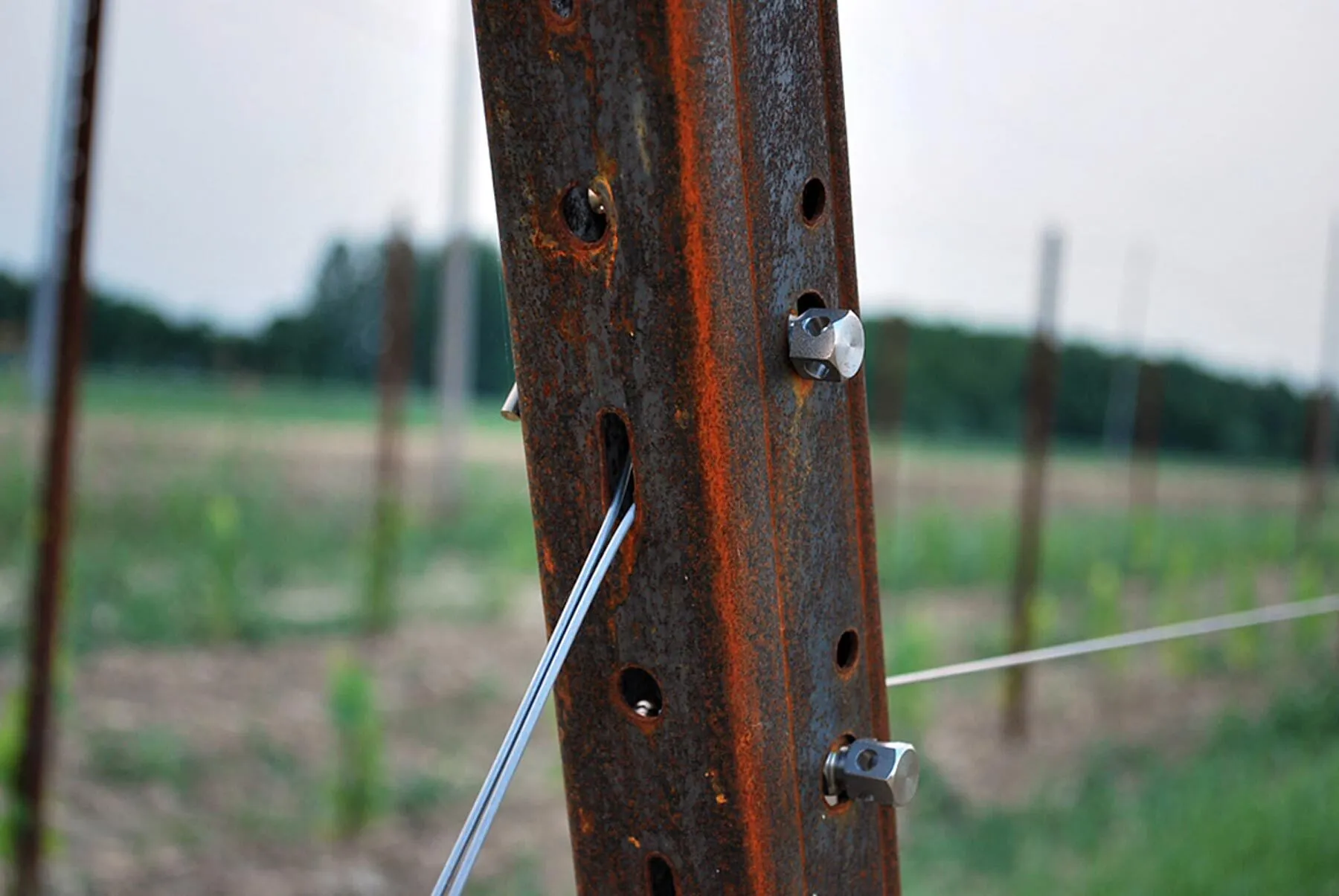
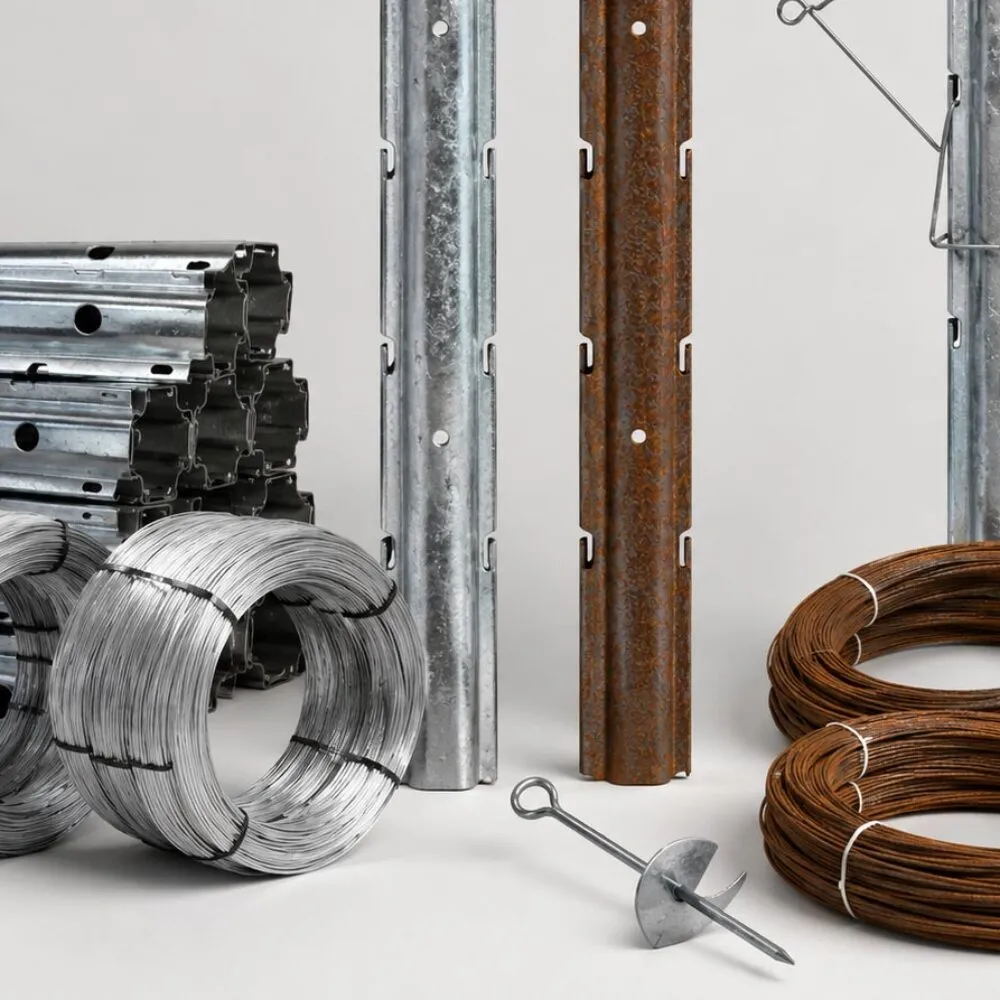
Galvanised high-tensile wire is the standard choice. The zinc coating protects sacrificially — it corrodes preferentially and the steel beneath stays intact. Coating class determines service life: heavier coatings last considerably longer in humid or coastal sites.
It depends on the training system:
Every additional wire adds tension at the end post. A six-wire VSP row applies substantially more longitudinal load than a single-wire cordon, and the anchoring must be sized accordingly.
Stainless steel resists corrosion better but costs more and has lower tensile strength at equal diameter, which means more sag over the same span. It is specified for accessories rather than for the load-bearing wires.
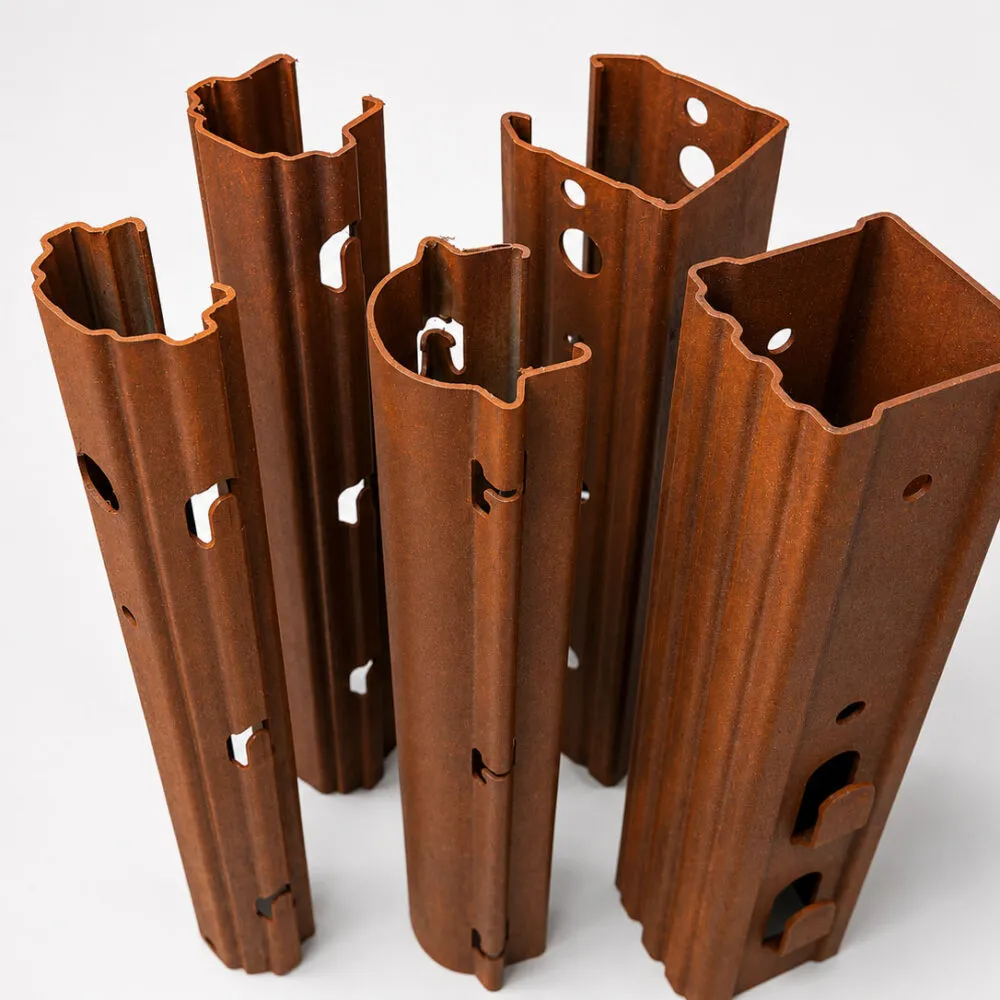
Corten wire is available where the posts are Corten: it keeps the row visually consistent and avoids the contrast between a weathered post and a bright galvanised wire.
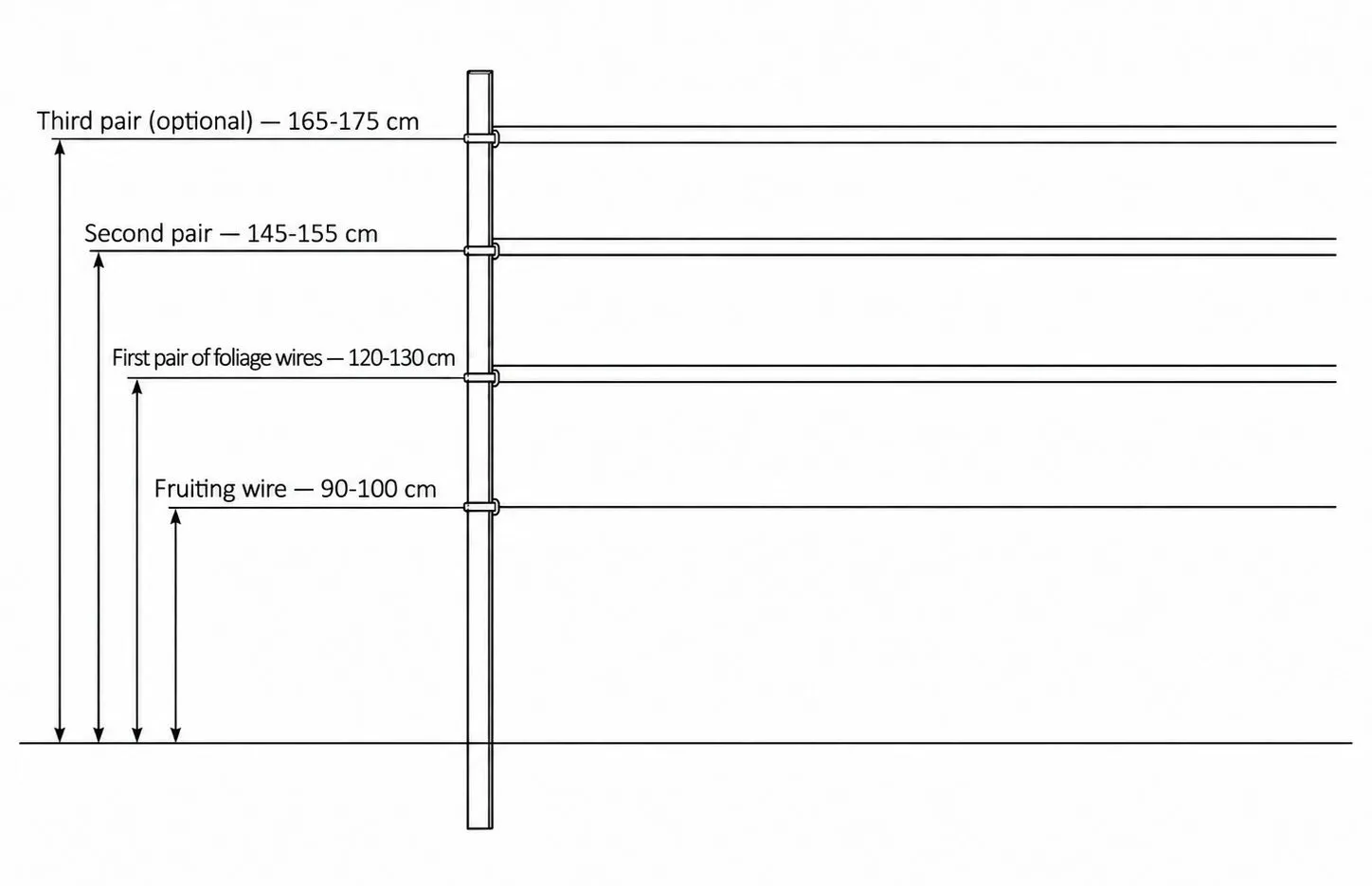
Typical heights above ground for a VSP system:
| Wire | Height | Function |
|---|---|---|
| Fruiting wire | 90–100 cm | carries the cordon and the crop |
| First pair of foliage wires | 120–130 cm | contains the shoots |
| Second pair | 145–155 cm | upper canopy containment |
| Third pair (optional) | 165–175 cm | vigorous varieties |
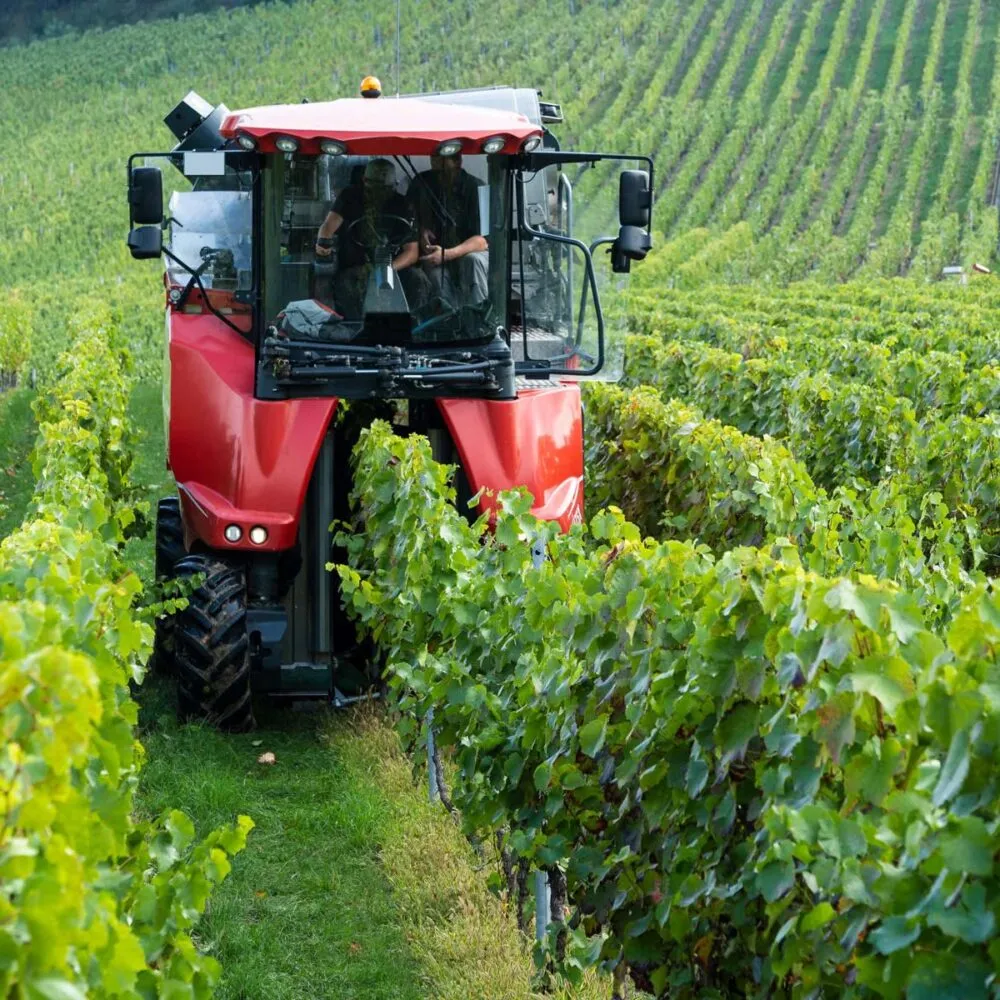
The fruiting wire height is set by the mechanical harvester, not by preference: if it sits too low the shaking head cannot work correctly. Confirm the specification of the machine that will operate in the block before fixing the height.
For Sylvoz and Casarsa the fruiting wire goes considerably higher, between 160 and 180 cm, with the canes hanging below.
Between 100 and 250 kg per wire for high-tensile galvanised wire, depending on gauge and span length.
Higher tension reduces sag but increases the load on end posts and anchors. On a six-wire row the terminal post can be resisting 400 to 1,500 kg continuously — not as a peak, but every hour for the life of the vineyard. Tension and anchoring are one decision, not two.
Wire loses tension for two reasons: seasonal temperature swings, since steel contracts in winter and expands in summer, and the permanent elongation that occurs in the first seasons under load.
Inline wire tensioners are operated with a key and hold their setting without slipping, which makes seasonal adjustment a quick operation. Spring strainers work differently: they absorb length changes automatically, reducing the peak stress transmitted to the end posts. On long rows, or where temperature swings are wide, springs cut the amount of manual re-tensioning required.
Check tension at the end of each winter, before bud break.


12.5 gauge (2.5 mm) high-tensile galvanised for the fruiting wire; 13 to 14 gauge for moveable foliage wires.
90 to 100 cm above ground for VSP systems. Confirm against the specification of the mechanical harvester used in the block.
Four to seven: one fruiting wire plus two or three pairs of moveable foliage wires.
100 to 250 kg per wire. Higher tension means less sag but more load on end posts and anchors.
It is possible but rarely specified: stainless has lower tensile strength at equal diameter, so it sags more over the same span, and costs considerably more than galvanised.
Check at the end of each winter before bud break. Rows fitted with spring strainers need manual adjustment far less frequently.
Sika manufactures galvanised trellis wire and Corten trellis wire, along with the tensioners, hooks and spacers that complete the system, and the steel posts that carry it. Over 400,000 posts a year to more than 40 countries, manufactured in Italy with steel certified to EU 10204 3.1.
For anchoring the end posts against the accumulated wire tension, see how to anchor grape trellis posts.

Fill out the form to receive the catalog and get a free, no-obligation quote within 24 hours.



Stay in touch with SIKA to keep up with news, offers and valuable advice from our experts!
We use Mailchimp as our marketing platform. By signing up, you agree that your information will be transferred to Mailchimp for processing. Learn more about Mailchimp’s privacy policy.